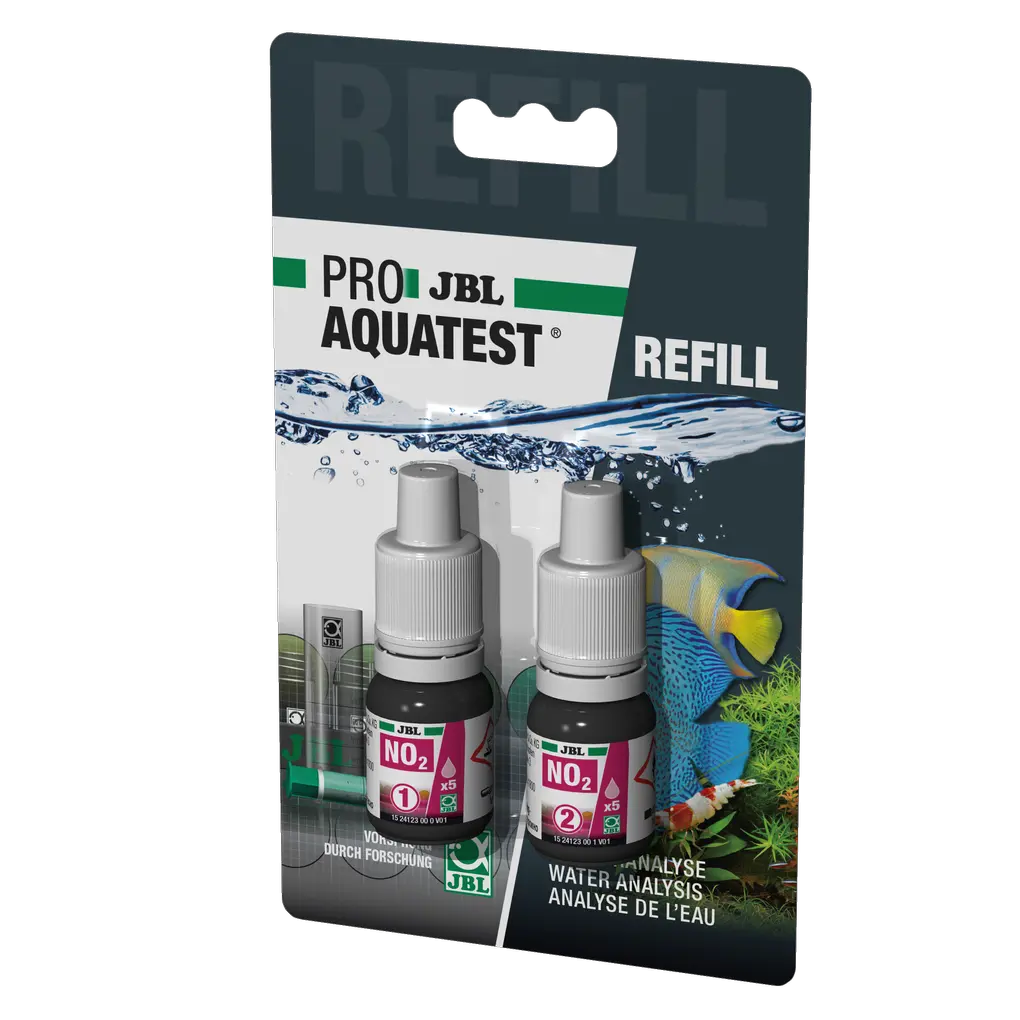
JBL PROAQUATEST NO2 REFILL

Il nitrito è un composto azotato tossico che si forma in caso di squilibrio batterico o di nuovo allestimento. Il test indica con precisione il contenuto di nitriti nell'acqua.

9.16 EUR

Preis inkl. 22 MwSt zzgl. Versand
Disponibile in magazzino – consegna in 1-3 giorni lavorativi
Händlersuche Gefahrenhinweise

Produktmerkmale

  • Il nitrito è un composto azotato tossico che si forma quando l'equilibrio batterico è disturbato o nei nuovi allestimenti. Il test mostra esattamente il contenuto di nitrito dell'acqua
  • Il blocco comparatore compensa il colore proprio dell’acqua: riempi le due provette con l’acqua da esaminare, aggiungi ad una di esse il reagente, poni le provette nel blocco comparatore e leggi i valori sulla scheda colorimetrica
  • Uso: nuovo allestimento/acqua dolce: giornalmente per 3 settimane. Nuovo allestimento/acqua marina: 1 volta/settimana. In caso di malattie o di moria dei pesci
  • Sul sito della JBL nell'area tematica Acquario o Laghetto troverai ampie informazioni sulle analisi dell'acqua e sulla risoluzione di problemi
  • Contenuto: 1 test nitrito per circa 50 misurazioni, con 2 reagenti, 2 provette di vetro con tappo avvitabile, siringa, blocco comparatore e scala colorimetrica. Il reagente di ricarica è disponibile separatamente

Gefahrenhinweise

JBL NO2 2 - Sicherheitsinformationen gemäß GHS

Signalwort: Attenzione

Gefahrensymbol

flammable irritant

Gefahrenhinweis

  • H319: Provoca grave irritazione oculare.
  • H226: Liquido e vapori infiammabili.

Sicherheitshinweise

  • P101: In caso di consultazione di un medico, tenere a disposizione il contenitore o l'etichetta del prodotto.
  • P102: Tenere fuori dalla portata dei bambini.

JBL NO2 1 - Sicherheitsinformationen gemäß GHS

Signalwort: Pericolo

Gefahrensymbol

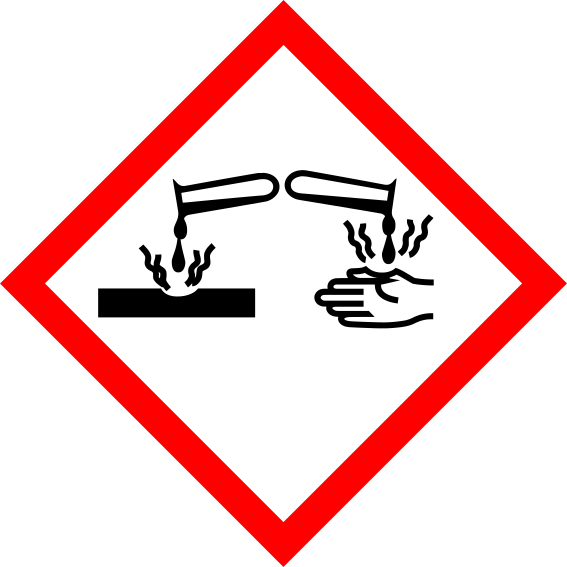
corrosive

Gefahrenhinweis

  • H318: Provoca gravi lesioni oculari.
  • H314: Provoca gravi ustioni cutanee e gravi lesioni oculari.

Sicherheitshinweise

  • P101: In caso di consultazione di un medico, tenere a disposizione il contenitore o l'etichetta del prodotto.
  • P102: Tenere fuori dalla portata dei bambini.

Gefahrbestimmende Komponente

  • 64-19-7: acido acetico

Information and consent to cookies & third-party content

We use technically necessary cookies/tools to offer, operate and secure this service. Furthermore ,with your express consent , we use cookies/tools for marketing, tracking, creating personalised content on third-party sites and for displaying third-party content on our website. You can revoke your consent at any time with effect for the future via the menu item ‘Cookie settings’.
By clicking on ‘Allow all’, you give us your express consent to the use of cookies/tools to improve the quality and performance of our service, for functional and personalised performance optimisation, to measure the effectiveness of our ads or campaigns, for personalised content for marketing purposes, including outside our website. This enables us to provide personalised online ads and extended analysis options about your user behaviour. This also includes accessing and storing data on your device. You can revoke your consent at any time with effect for the future via the menu item ‘Cookie settings’.
You can use the ‘Change settings’ button to grant and revoke individual consent to the cookies/tools and receive further information on the cookies/tools we use, their purposes and duration.
By clicking on ‘Only absolutely necessary’, only technically necessary cookies/tools are used.

Our data protection declaration tells you how we process personal data and what purposes we use the data processing for.
PUSH messages from JBL

What are PUSH messages? As part of the W3C standard, web notifications define an API for end-user notifications that are sent to the user's desktop and/or mobile devices via the browser. Notifications appear on the end devices as they are familiar to the end user from apps installed on the device (e.g. emails). Notifications appear on the end user’s device, just like an app (e.g. for emails) installed on the device.

A notification makes it possible to inform the user about an event outside the context of a website, such as a new blog post, a competition or a voucher.

These notifications enable a website operator to contact its users whenever they have a browser open - it doesn’t matter whether the user is currently visiting the website or not.

To be able to send web push notifications, all you need is a website with a web push code installed. This allows brands without apps to take advantage of many of the benefits of push notifications (personalised real-time communications at just the right moment).

Web notifications are part of the W3C standard and define an API for end user notifications. A notification makes it possible to inform the user about an event, such as a new blog post, outside the context of a website.

JBL GmbH & Co. KG provides this service free of charge, and it is easy to activate or deactivate.