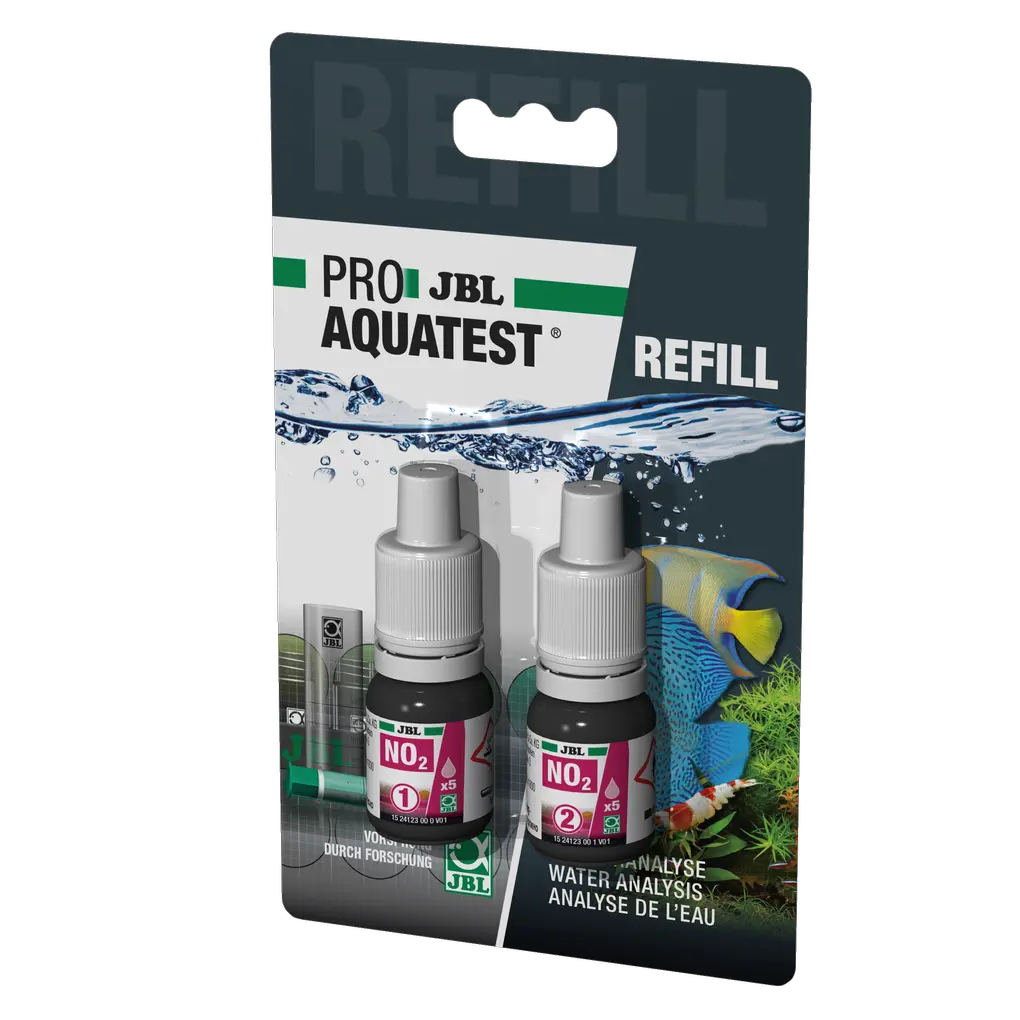
JBL PROAQUATEST NO2 REFILL

Azotyn jest toksycznym związkiem azotu, który powstaje w przypadku zaburzenia równowagi bakteryjnej lub podczas ponownego zakładania akwarium. Test dokładnie wskazuje zawartość azotynów w wodzie.

9.24 EUR

Preis inkl. 23 MwSt zzgl. Versand
Händlersuche Gefahrenhinweise

Produktmerkmale

  • Azotyny są toksycznym związkiem azotu, który powstaje przy zaburzonej równowadze bakteryjnej lub przy zakładaniu nowego akwarium. Test pokazuje dokładnie zawartość azotynów w wodzie
  • Laboratoryjny system porównawczy do wyrównania własnego zabarwienia wody: Napełnienie szklanych kuwet wodą próbki, dodanie odczynników do kuwety, umieszczenie kuwet w uchwycie, odczyt wartości z karty barw
  • Stosowanie: Przy zakładaniu nowego akwarium słodkowodnego: 3 tygodnie codziennie. Przy zakładaniu nowego akwarium morskiego: 1x tygodniowo. W razie chorób lub wymierania ryb
  • Na stronie internetowej JBL w zakładce Tematy Akwarium lub Staw ogrodowy znajdą Państwo wyczerpujące informacje na temat analiz wody i rozwiązań problemów
  • W zestawie: 1 Zestaw testów azotynów do ok. 50 pomiarów w zest. 2 odczynniki, 2 szklane kuwety z zakrętką, strzykawka, blok porównawczy i skala barw. Opakowanie uzupełniające odczynników dostępne oddzielnie

Gefahrenhinweise

JBL NO2 2 - Sicherheitsinformationen gemäß GHS

Signalwort: Uwaga

Gefahrensymbol

flammable irritant

Gefahrenhinweis

  • H319: Działa drażniąco na oczy.
  • H226: Łatwopalna ciecz i pary.

Sicherheitshinweise

  • P101: W razie konieczności zasięgnięcia porady lekarza należy pokazać pojemnik lub etykietę.
  • P102: Chronić przed dziećmi.

JBL NO2 1 - Sicherheitsinformationen gemäß GHS

Signalwort: Niebezpieczeństwo

Gefahrensymbol

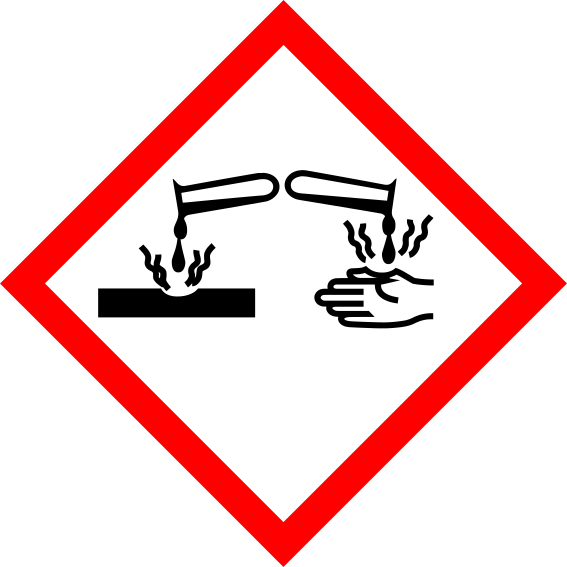
corrosive

Gefahrenhinweis

  • H314: Powoduje poważne oparzenia skóry oraz uszkodzenia oczu.

Sicherheitshinweise

  • P101: W razie konieczności zasięgnięcia porady lekarza należy pokazać pojemnik lub etykietę.
  • P102: Chronić przed dziećmi.

Gefahrbestimmende Komponente

  • 64-19-7: kwas octowy

Information and consent to cookies & third-party content

We use technically necessary cookies/tools to offer, operate and secure this service. Furthermore ,with your express consent , we use cookies/tools for marketing, tracking, creating personalised content on third-party sites and for displaying third-party content on our website. You can revoke your consent at any time with effect for the future via the menu item ‘Cookie settings’.
By clicking on ‘Allow all’, you give us your express consent to the use of cookies/tools to improve the quality and performance of our service, for functional and personalised performance optimisation, to measure the effectiveness of our ads or campaigns, for personalised content for marketing purposes, including outside our website. This enables us to provide personalised online ads and extended analysis options about your user behaviour. This also includes accessing and storing data on your device. You can revoke your consent at any time with effect for the future via the menu item ‘Cookie settings’.
You can use the ‘Change settings’ button to grant and revoke individual consent to the cookies/tools and receive further information on the cookies/tools we use, their purposes and duration.
By clicking on ‘Only absolutely necessary’, only technically necessary cookies/tools are used.

Our data protection declaration tells you how we process personal data and what purposes we use the data processing for.
PUSH messages from JBL

What are PUSH messages? As part of the W3C standard, web notifications define an API for end-user notifications that are sent to the user's desktop and/or mobile devices via the browser. Notifications appear on the end devices as they are familiar to the end user from apps installed on the device (e.g. emails). Notifications appear on the end user’s device, just like an app (e.g. for emails) installed on the device.

A notification makes it possible to inform the user about an event outside the context of a website, such as a new blog post, a competition or a voucher.

These notifications enable a website operator to contact its users whenever they have a browser open - it doesn’t matter whether the user is currently visiting the website or not.

To be able to send web push notifications, all you need is a website with a web push code installed. This allows brands without apps to take advantage of many of the benefits of push notifications (personalised real-time communications at just the right moment).

Web notifications are part of the W3C standard and define an API for end user notifications. A notification makes it possible to inform the user about an event, such as a new blog post, outside the context of a website.

JBL GmbH & Co. KG provides this service free of charge, and it is easy to activate or deactivate.