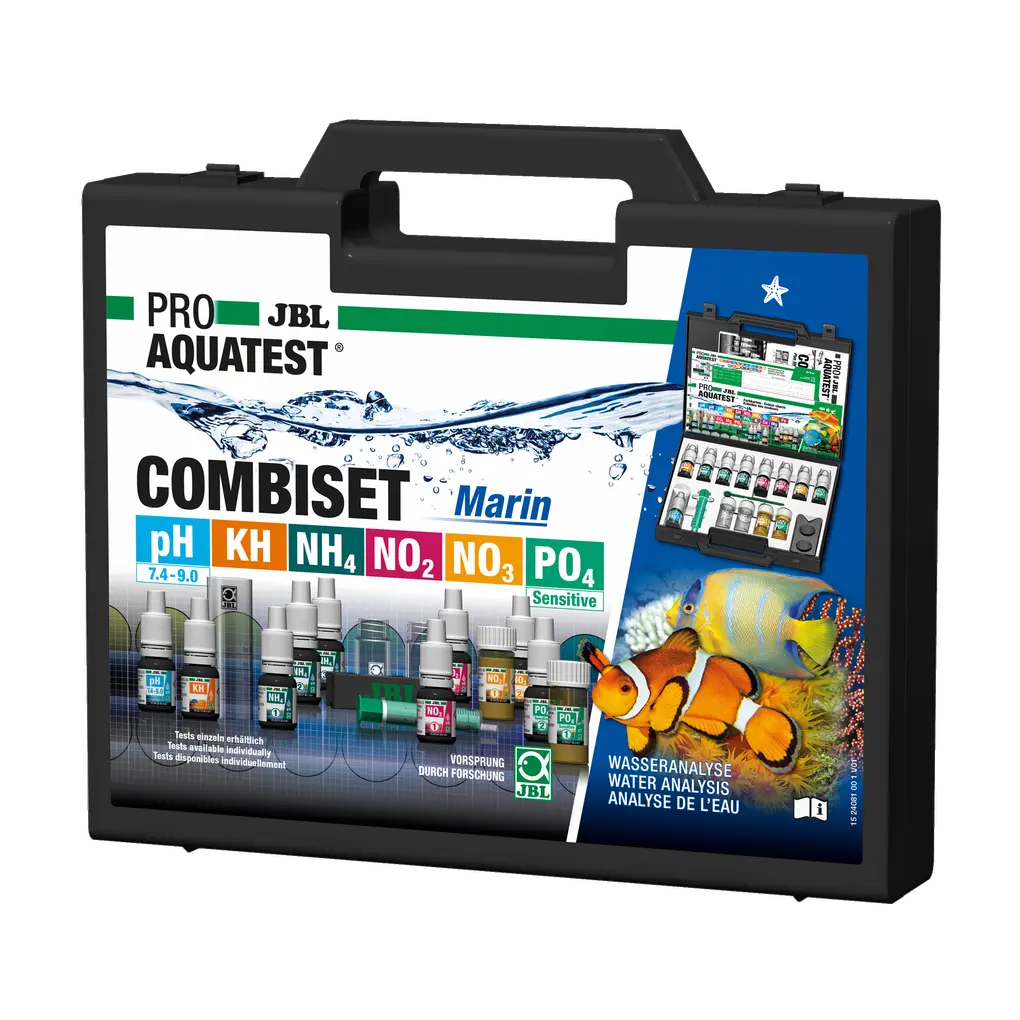
JBL PROAQUATEST COMBISET Marin

6 watertesten voor het eenvoudig en nauwkeurig bepalen van de belangrijkste waterwaarden in zeewater, speciaal voor aquaria.
Artikel-Nr. 2408100

64.42 EUR

Preis inkl. 21 MwSt zzgl. Versand
Op voorraad – binnen 1-3 werkdagen bij jou
Händlersuche Gefahrenhinweise

Produktmerkmale

  • 6 watertesten voor een eenvoudige maar nauwkeurige bepaling van de belangrijkste waterwaarden in zoutwater, speciaal voor aquariums met vissen
  • Eenvoudig: Kleurindicator toevoegen en met kleurenkaart vergelijken of het aantal druppels tot kleuromslag tellen
  • Bevat een test voor carbonaathardheid, pH-waarde, ammonium/ ammoniak, nitriet, nitraat en fosfaat
  • Kindveilige reagensflessen en watervaste kunststof koffer. Navullende reagentia afzonderlijk verkrijgbaar
  • Inhoud: Watervaste kunststof koffer, 11 reagentia, comparatorblok, 3 cuvetten, spuit, maatlepel, kleurenkaarten, protocolbladen en handleiding

Gefahrenhinweise

JBL NO3 2 - Sicherheitsinformationen gemäß GHS

Signalwort: Gevaar

Gefahrensymbol

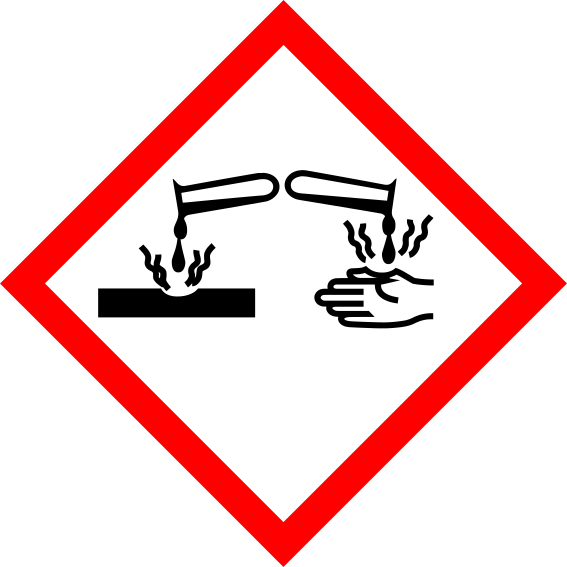
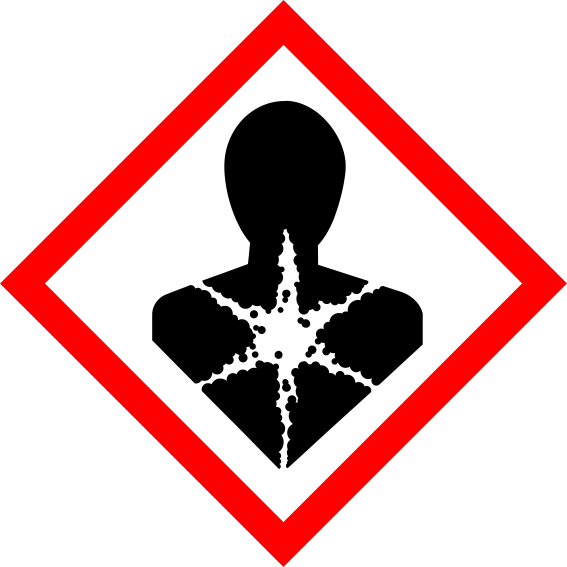
corrosive irritant health_hazard

Gefahrenhinweis

  • H318: Veroorzaakt ernstig oogletsel.
  • H314: Veroorzaakt ernstige brandwonden en oogletsel.
  • H341: Verdacht van het veroorzaken van genetische schade.
  • H317: Kan een allergische huidreactie veroorzaken.
  • H412: Schadelijk voor in het water levende organismen, met langdurige gevolgen.

Sicherheitshinweise

  • P101: Bij het inwinnen van medisch advies, de verpakking of het etiket ter beschikking houden.
  • P102: Buiten het bereik van kinderen houden.

Gefahrbestimmende Komponente

  • 7647-01-0/1: hydrogeenchloride
  • 541-69-5: m-fenyleendiaminedihydrochloride

JBL NO3 1 - Sicherheitsinformationen gemäß GHS

Signalwort: Gevaar

Gefahrensymbol

corrosive irritant environmental_hazard

Gefahrenhinweis

  • H318: Veroorzaakt ernstig oogletsel.
  • H314: Veroorzaakt ernstige brandwonden en oogletsel.
  • H317: Kan een allergische huidreactie veroorzaken.
  • H411: Giftig voor in het water levende organismen, met langdurige gevolgen.

Sicherheitshinweise

  • P101: Bij het inwinnen van medisch advies, de verpakking of het etiket ter beschikking houden.
  • P102: Buiten het bereik van kinderen houden.

Gefahrbestimmende Komponente

  • 121-57-3: sulfanilzuur

JBL PO4 Sensitive 2 - Sicherheitsinformationen gemäß GHS

Signalwort: Gevaar

Gefahrensymbol

corrosive irritant

Gefahrenhinweis

  • H318: Veroorzaakt ernstig oogletsel.
  • H314: Veroorzaakt ernstige brandwonden en oogletsel.
  • H302: Schadelijk bij inslikken.
  • H335: Kan irritatie van de luchtwegen veroorzaken.

Sicherheitshinweise

  • P101: Bij het inwinnen van medisch advies, de verpakking of het etiket ter beschikking houden.
  • P102: Buiten het bereik van kinderen houden.

Gefahrbestimmende Komponente

  • 7647-01-0/1: hydrogeenchloride

JBL NO2 2 - Sicherheitsinformationen gemäß GHS

Signalwort: Opgelet

Gefahrensymbol

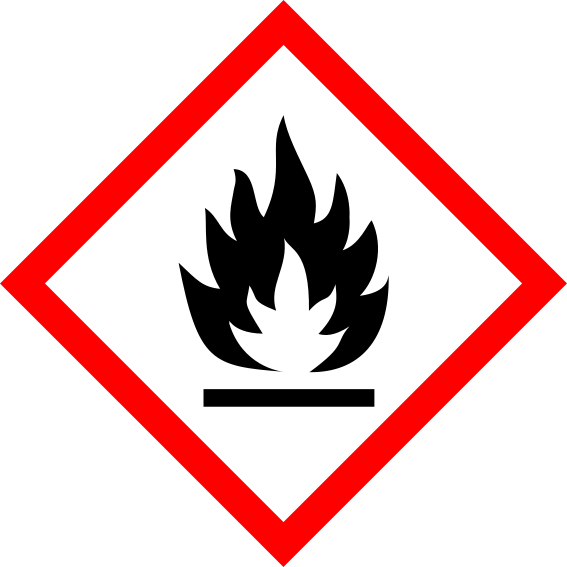
flammable irritant

Gefahrenhinweis

  • H319: Veroorzaakt ernstige oogirritatie.
  • H226: Ontvlambare vloeistof en damp.

Sicherheitshinweise

  • P101: Bij het inwinnen van medisch advies, de verpakking of het etiket ter beschikking houden.
  • P102: Buiten het bereik van kinderen houden.

JBL NO2 1 - Sicherheitsinformationen gemäß GHS

Signalwort: Gevaar

Gefahrensymbol

corrosive

Gefahrenhinweis

  • H318: Veroorzaakt ernstig oogletsel.
  • H314: Veroorzaakt ernstige brandwonden en oogletsel.

Sicherheitshinweise

  • P101: Bij het inwinnen van medisch advies, de verpakking of het etiket ter beschikking houden.
  • P102: Buiten het bereik van kinderen houden.

Gefahrbestimmende Komponente

  • 64-19-7: azijnzuur

JBL pH 7.4-9.0 - Sicherheitsinformationen gemäß GHS

Signalwort: Opgelet

Gefahrensymbol

flammable irritant

Gefahrenhinweis

  • H319: Veroorzaakt ernstige oogirritatie.
  • H226: Ontvlambare vloeistof en damp.

Sicherheitshinweise

  • P101: Bij het inwinnen van medisch advies, de verpakking of het etiket ter beschikking houden.
  • P102: Buiten het bereik van kinderen houden.

JBL KH - Sicherheitsinformationen gemäß GHS

Signalwort: Gevaar

Gefahrensymbol

flammable corrosive

Gefahrenhinweis

  • H226: Ontvlambare vloeistof en damp.
  • H318: Veroorzaakt ernstig oogletsel.
  • H314: Veroorzaakt ernstige brandwonden en oogletsel.

Sicherheitshinweise

  • P101: Bij het inwinnen van medisch advies, de verpakking of het etiket ter beschikking houden.
  • P102: Buiten het bereik van kinderen houden.

JBL NH4 2 - Sicherheitsinformationen gemäß GHS

Signalwort: Gevaar

Gefahrensymbol

corrosive environmental_hazard

Gefahrenhinweis

  • H318: Veroorzaakt ernstig oogletsel.
  • H314: Veroorzaakt ernstige brandwonden en oogletsel.
  • H411: Giftig voor in het water levende organismen, met langdurige gevolgen.
  • H400: Zeer giftig voor in het water levende organismen.
  • EUH031: Vormt giftig gas in contact met zuren.

Sicherheitshinweise

  • P101: Bij het inwinnen van medisch advies, de verpakking of het etiket ter beschikking houden.
  • P102: Buiten het bereik van kinderen houden.

Gefahrbestimmende Komponente

  • 7681-52-9/1: natriumhypochloriet, oplossing
  • 1310-73-2: natriumhydroxide

JBL NH4 3 - Sicherheitsinformationen gemäß GHS

Signalwort: Gevaar

Gefahrensymbol

flammable irritant

Gefahrenhinweis

  • H319: Veroorzaakt ernstige oogirritatie.
  • H315: Veroorzaakt huidirritatie.
  • H336: Kan slaperigheid of duizeligheid veroorzaken.
  • H225: Licht ontvlambare vloeistof en damp.

Sicherheitshinweise

  • P101: Bij het inwinnen van medisch advies, de verpakking of het etiket ter beschikking houden.
  • P102: Buiten het bereik van kinderen houden.

Gefahrbestimmende Komponente

  • 67-63-0: 2-propanol

Information and consent to cookies & third-party content

We use technically necessary cookies/tools to offer, operate and secure this service. Furthermore ,with your express consent , we use cookies/tools for marketing, tracking, creating personalised content on third-party sites and for displaying third-party content on our website. You can revoke your consent at any time with effect for the future via the menu item ‘Cookie settings’.
By clicking on ‘Allow all’, you give us your express consent to the use of cookies/tools to improve the quality and performance of our service, for functional and personalised performance optimisation, to measure the effectiveness of our ads or campaigns, for personalised content for marketing purposes, including outside our website. This enables us to provide personalised online ads and extended analysis options about your user behaviour. This also includes accessing and storing data on your device. You can revoke your consent at any time with effect for the future via the menu item ‘Cookie settings’.
You can use the ‘Change settings’ button to grant and revoke individual consent to the cookies/tools and receive further information on the cookies/tools we use, their purposes and duration.
By clicking on ‘Only absolutely necessary’, only technically necessary cookies/tools are used.

Our data protection declaration tells you how we process personal data and what purposes we use the data processing for.
PUSH messages from JBL

What are PUSH messages? As part of the W3C standard, web notifications define an API for end-user notifications that are sent to the user's desktop and/or mobile devices via the browser. Notifications appear on the end devices as they are familiar to the end user from apps installed on the device (e.g. emails). Notifications appear on the end user’s device, just like an app (e.g. for emails) installed on the device.

A notification makes it possible to inform the user about an event outside the context of a website, such as a new blog post, a competition or a voucher.

These notifications enable a website operator to contact its users whenever they have a browser open - it doesn’t matter whether the user is currently visiting the website or not.

To be able to send web push notifications, all you need is a website with a web push code installed. This allows brands without apps to take advantage of many of the benefits of push notifications (personalised real-time communications at just the right moment).

Web notifications are part of the W3C standard and define an API for end user notifications. A notification makes it possible to inform the user about an event, such as a new blog post, outside the context of a website.

JBL GmbH & Co. KG provides this service free of charge, and it is easy to activate or deactivate.