Peru 2025

back to the worldmap overview

Bodensalmlerschwärme und unbekannte Saugwelse: Schnorcheln im klarsten Wasser von Peru

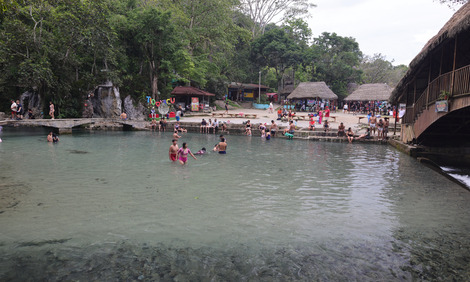
Das Team Discus hatte eine lange Busfahrt vor sich. Bei der Planung der Expedition hatte Expeditionsleiter Heiko Blessin eine Region gefunden, etwa drei Autostunden von Tarapoto entfernt, wo es kristallklares Wasser gab. Leider hatten auch die Einheimischen dieses traumhafte Gewässer entdeckt und einen kleinen Vergnügungspark drumherum gebaut.

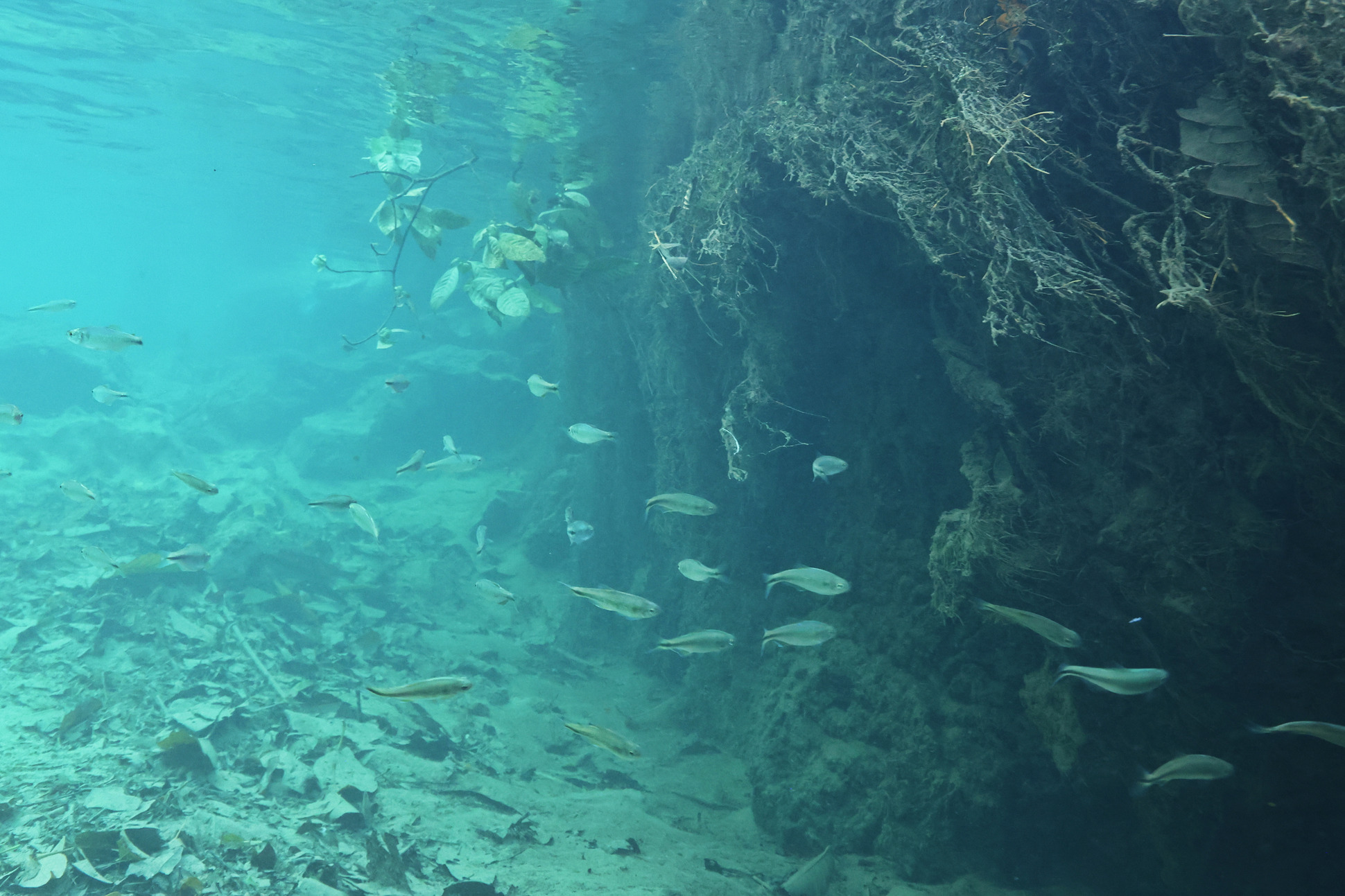
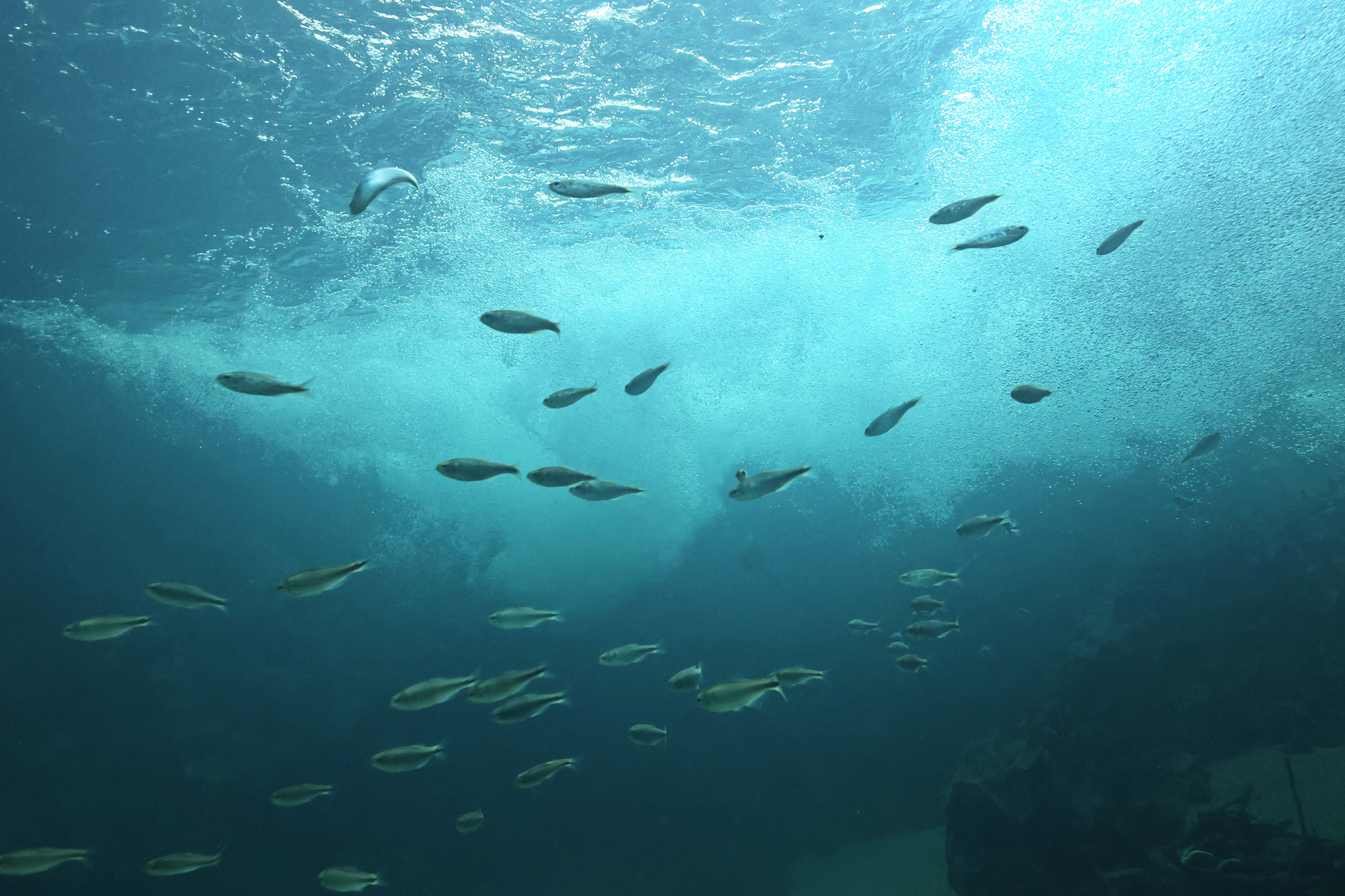
Aber fischbegeisterte Menschen können Touristen um sich herum ausblenden und sich nur auf das klare Wasser mit den darin befindlichen Fischen konzentrieren. Ab und zu kam eben ein paddelnder Peruaner mit Schwimmring ins Bild, aber die tolle Sichtweite im kalten Wasser war einfach phänomenal. Das Wasser entsprang einer Quelle, die nur wenige hundert Meter oberhalb des Parks Tioyaku entsprang und auch die niedrige Wassertemperatur von 19,3 °C erklärte.

Wasseranalysen, durchgeführt unter den Augen der staunenden Peruaner, zeigten völlig andere Wasserwerte als alle vorher gemessenen Gewässer: Eine Leitfähigkeit von 250 µS/cm setzte sich zusammen aus einer Gesamthärte von 5 °dGH und einer Karbonathärte von 5 °dKH. Der pH-Wert lag bei 7,4 und der Sauerstoffgehalt beim Maximum von 10 mg/l – nicht überraschend bei den Miniwasserfällen, die zum Fluss wurden. Eisen war nicht messbar.

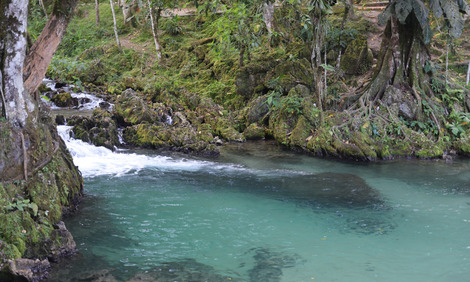
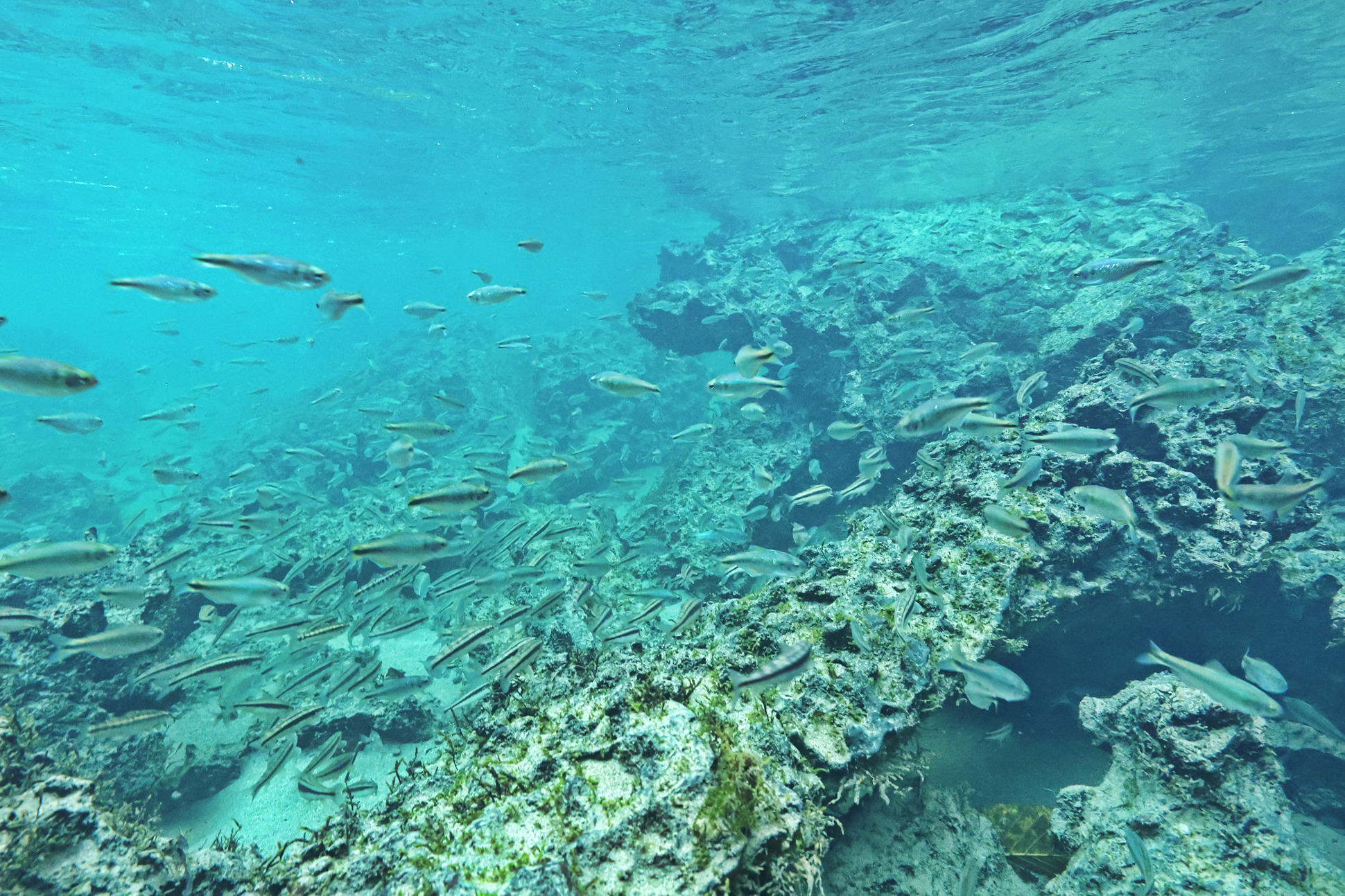
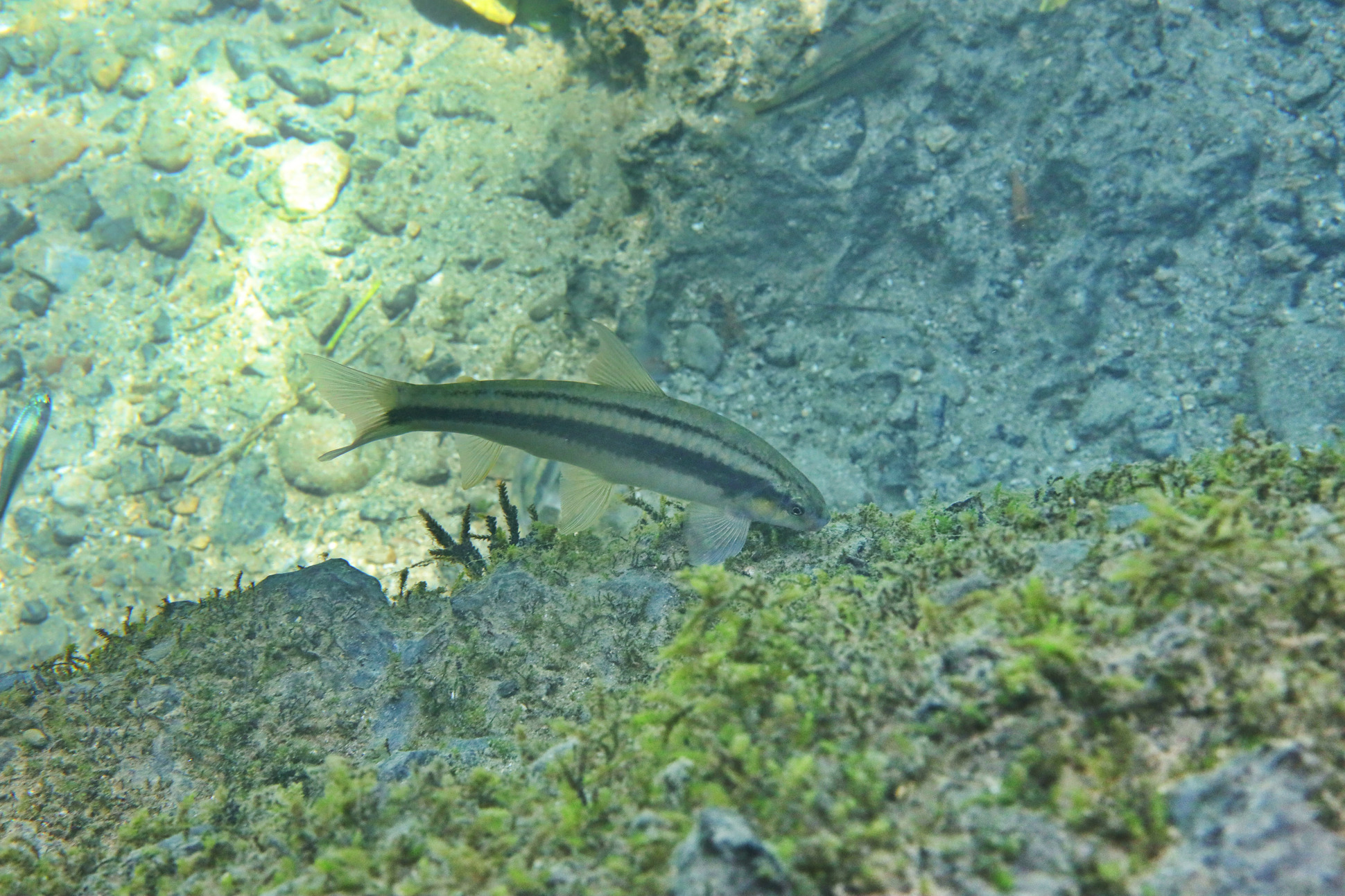
Die Fischfauna war nicht sehr vielfältig. Zwei verschiedene Gebirgsharnischwelse aus der Gattung Chaetostoma, zwei verschiedene Bodensalmler und zwei freischwimmende Salmlerarten waren zu sehen. In einem Minizufluss mit extremer Strömung war eine der beiden Chaetostoma-Arten zu sehen. Die Strömung war so stark, dass man nur durch festklemmen am Ufer oder an Steinen ein paar Meter im Bach vorrücken konnte. Aber die Sichtung des Saugwelses war die Mühe wert!

Suchbild: Wer sieht den Saugwels auf Anhieb?

Traurig war es, dass auch in diesen Gewässern invasive Arten beobachtet wurden: Eine Tilapiaart (Oreochromis aureus) wurde im ruhigeren Teil des Flusses gesehen.

Ein Team hatte noch ein unerwartetes Ereignis auf der Rückfahrt: Ein umgestürzter LKW blockierte die einzige Straße nach Tarapoto und es war lange Zeit unklar, wie und wann es möglich würde, zurück zur Lodge zu gelangen. Erst spät abends kam das Team in der Lodge an – aber es kam immerhin an.

Am letzten Tag hatten alle Teams alle Ziele besucht und z. T. gleiche, z. T. aber auch unterschiedliche Tiere beobachten können. Damit war der Teil im amazonischen Tiefland beendet und es ging mit dem Flugzeug über Lima in die Anden nach Cusco in 3400 m Höhe

Information and consent to cookies & third-party content

We use technically necessary cookies/tools to offer, operate and secure this service. Furthermore ,with your express consent , we use cookies/tools for marketing, tracking, creating personalised content on third-party sites and for displaying third-party content on our website. You can revoke your consent at any time with effect for the future via the menu item ‘Cookie settings’.
By clicking on ‘Allow all’, you give us your express consent to the use of cookies/tools to improve the quality and performance of our service, for functional and personalised performance optimisation, to measure the effectiveness of our ads or campaigns, for personalised content for marketing purposes, including outside our website. This enables us to provide personalised online ads and extended analysis options about your user behaviour. This also includes accessing and storing data on your device. You can revoke your consent at any time with effect for the future via the menu item ‘Cookie settings’.
You can use the ‘Change settings’ button to grant and revoke individual consent to the cookies/tools and receive further information on the cookies/tools we use, their purposes and duration.
By clicking on ‘Only absolutely necessary’, only technically necessary cookies/tools are used.

Our data protection declaration tells you how we process personal data and what purposes we use the data processing for.

PUSH messages from JBL

What are PUSH messages? As part of the W3C standard, web notifications define an API for end-user notifications that are sent to the user's desktop and/or mobile devices via the browser. Notifications appear on the end devices as they are familiar to the end user from apps installed on the device (e.g. emails). Notifications appear on the end user’s device, just like an app (e.g. for emails) installed on the device.

A notification makes it possible to inform the user about an event outside the context of a website, such as a new blog post, a competition or a voucher.

These notifications enable a website operator to contact its users whenever they have a browser open - it doesn’t matter whether the user is currently visiting the website or not.

To be able to send web push notifications, all you need is a website with a web push code installed. This allows brands without apps to take advantage of many of the benefits of push notifications (personalised real-time communications at just the right moment).

Web notifications are part of the W3C standard and define an API for end user notifications. A notification makes it possible to inform the user about an event, such as a new blog post, outside the context of a website.

JBL GmbH & Co. KG provides this service free of charge, and it is easy to activate or deactivate.