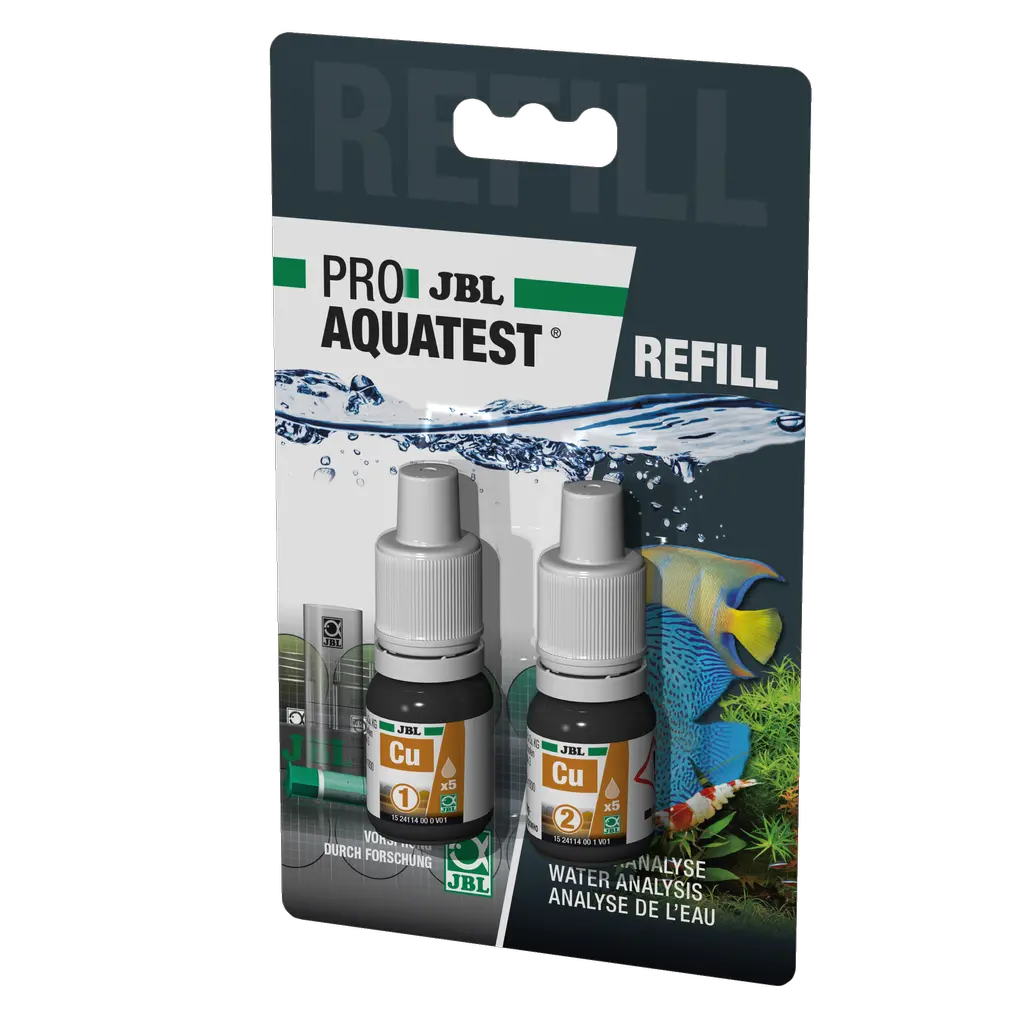
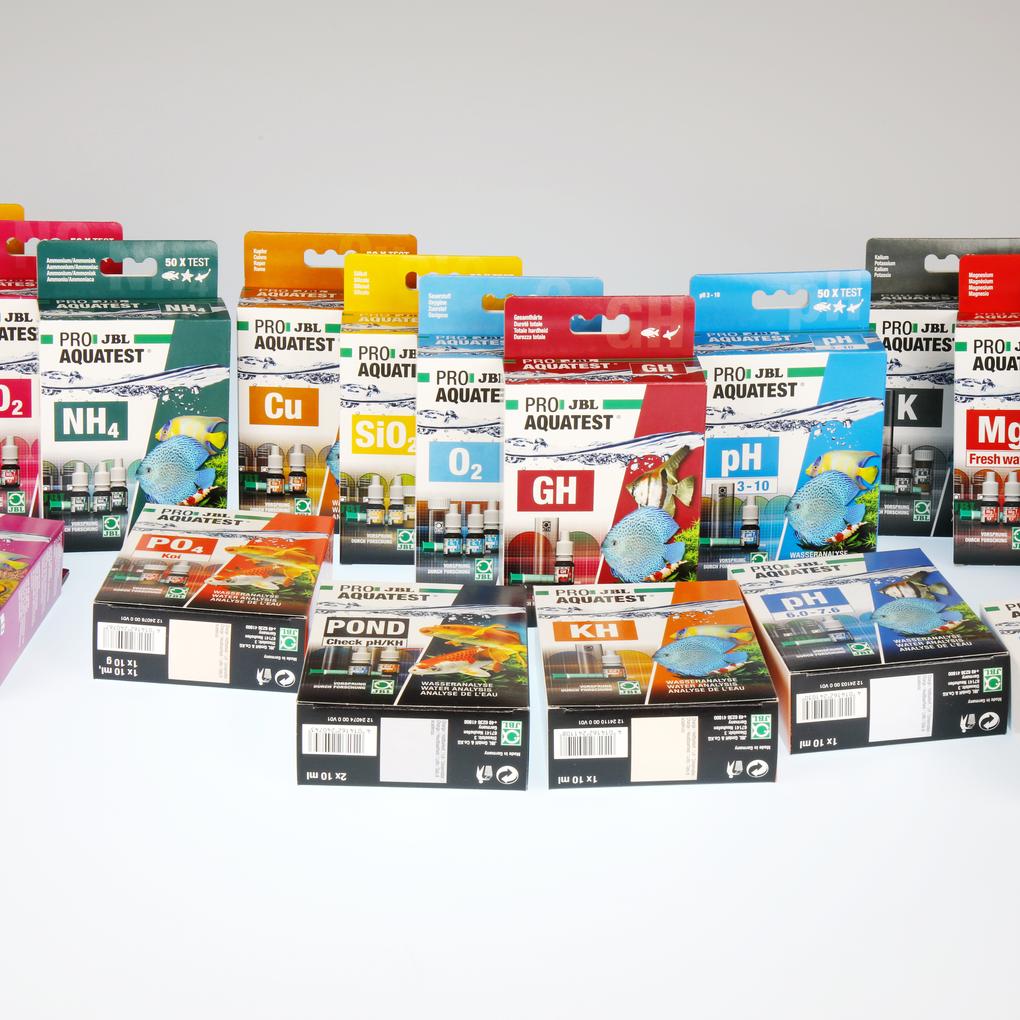
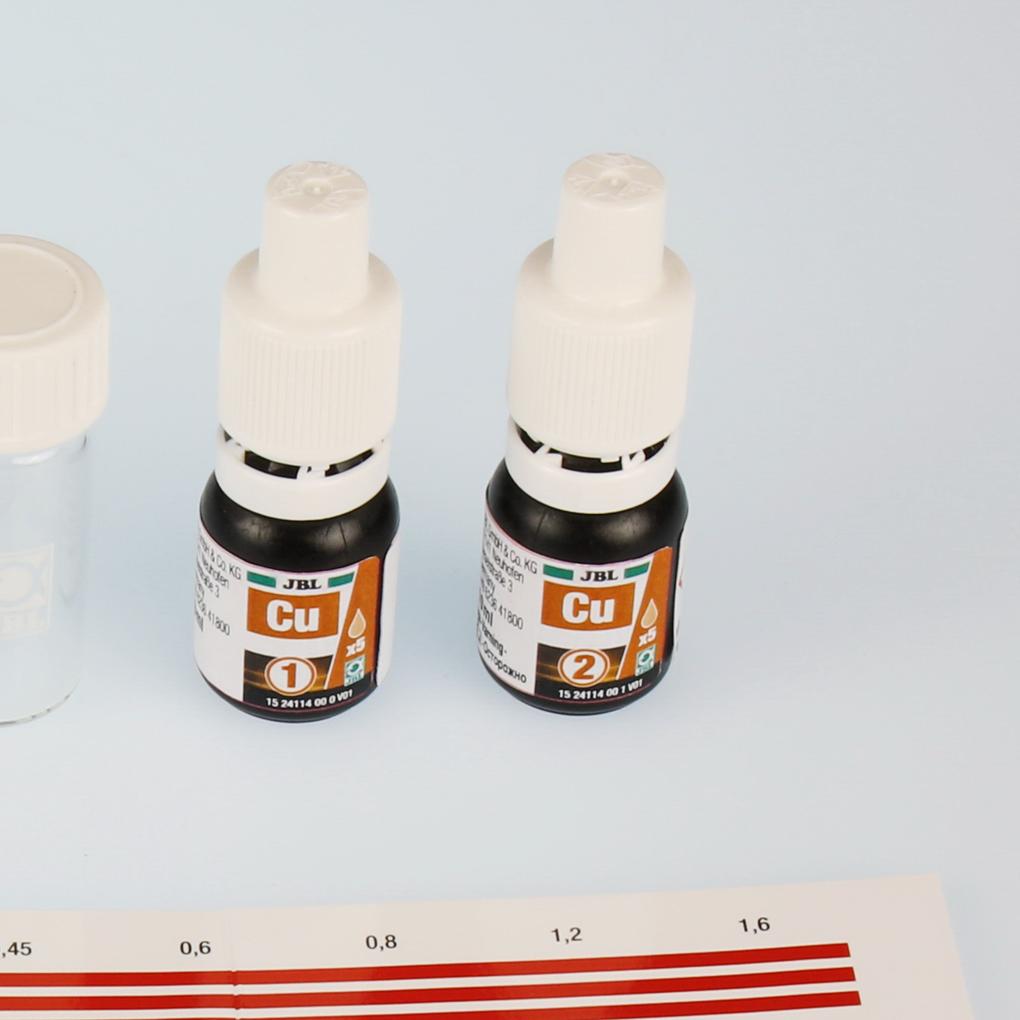
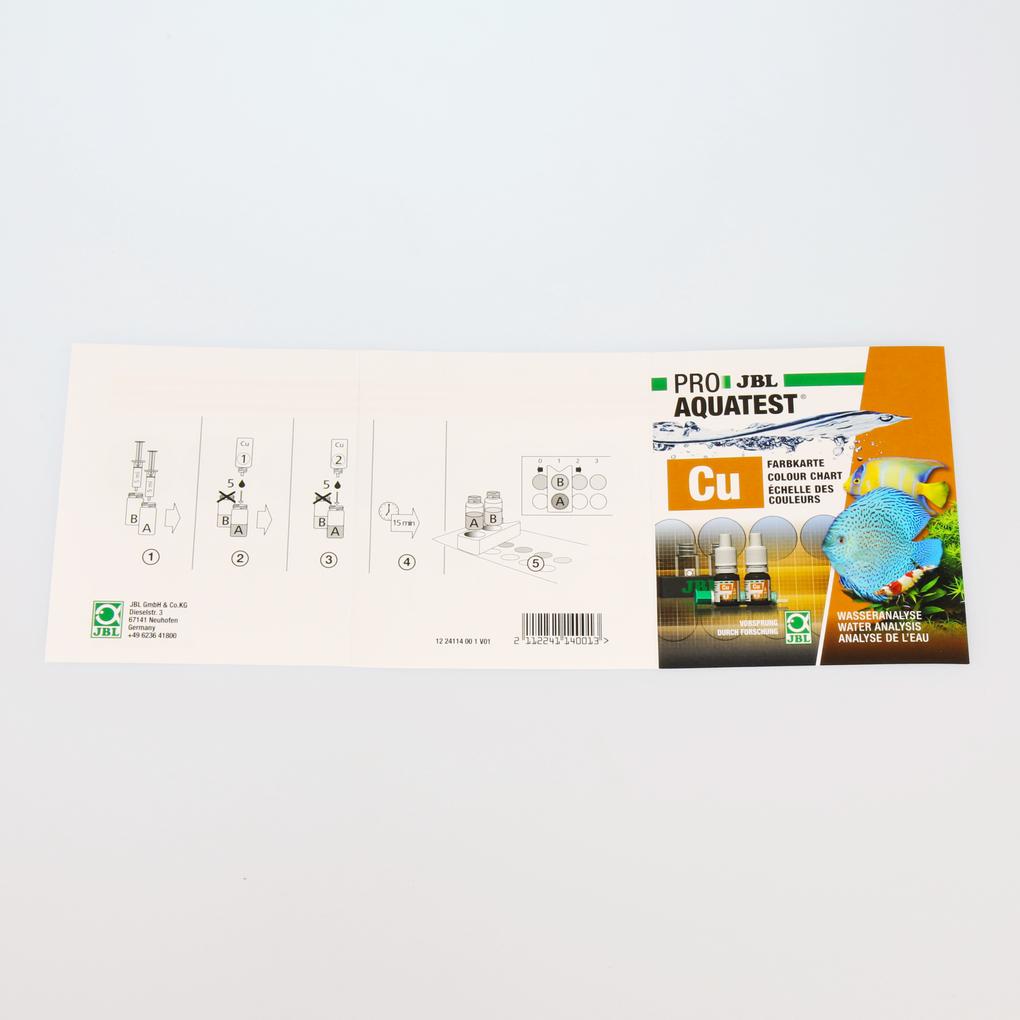
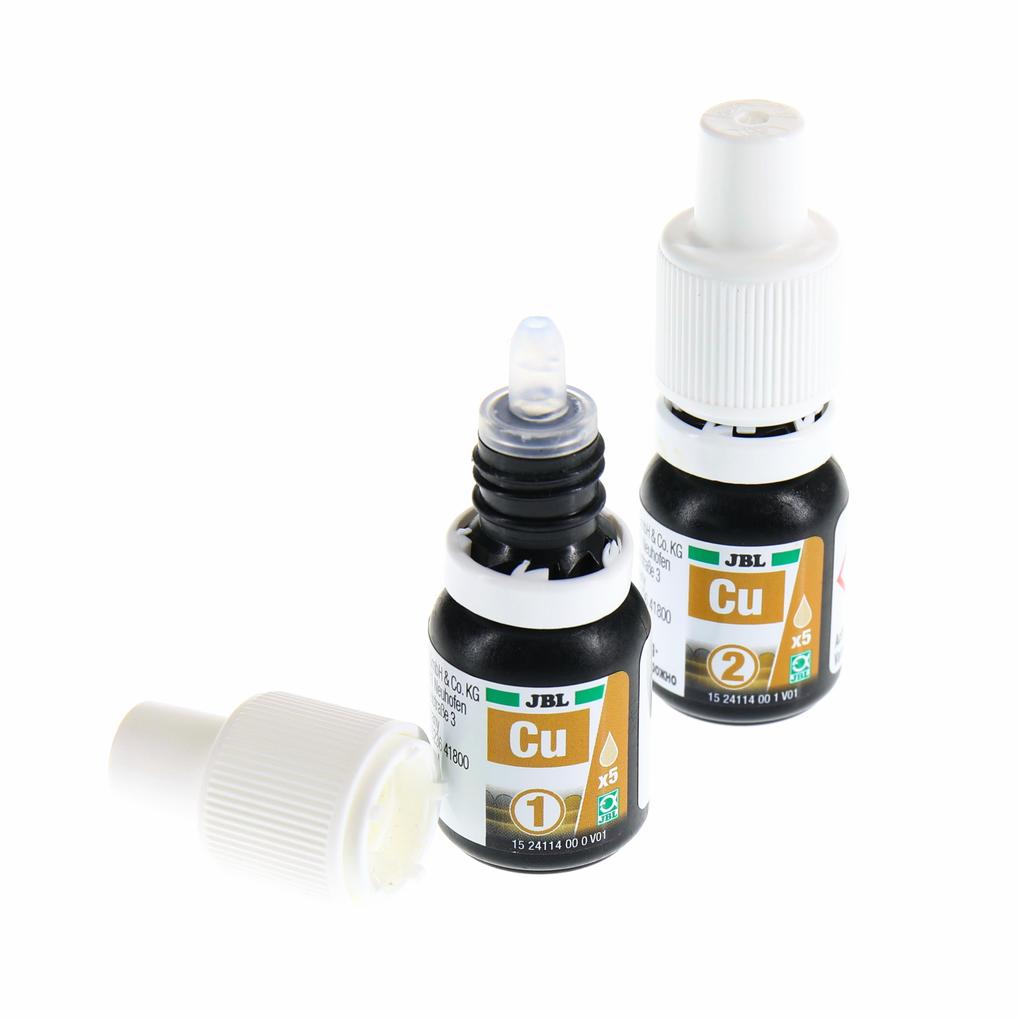
JBL PROAQUATEST Cu REFILL
In unserem FAQ‑Bereich findet ihr Antworten auf die am häufigsten gestellten Fragen. Solltet ihr hier nicht fündig werden, zögert bitte nicht, uns direkt zu kontaktieren – wir helfen euch gerne weiter.
If one of your measurements reaches the end of the colour chart scale you can multiply the scale by diluting later tests with distilled water (e.g. JBL Dest). _x000D_ _x000D_ Here’s how to do it: dilute the sample with distilled water and carry out the test once more. _x000D_ _x000D_ This works in detail as follows: _x000D_ GH test: Instead of 5 ml use 10 ml aquarium water. Now 1 drop is equivalent to 0.5 dGH. _x000D_ KH test: Instead of 5 ml use 10 ml aquarium water. Now 1 drop is equivalent to 0.5 dGH. _x000D_ _x000D_ Note: when using 10 ml sample water the colour development is weaker with the first drops than with 5 ml sample water. Put the measuring container on a white underlay for a better readability. _x000D_ _x000D_ NH4/NH3 ammonium/ammonia, NO2 nitrite, Fe iron and Cu copper: _x000D_ 2.5 ml sample + 2.5 ml dist. water: result times 2 _x000D_ 1 ml sample + 4 ml dist. water: result times 5 _x000D_ 0.5 ml sample + 4.5 ml dist. water: result times 10 _x000D_ _x000D_ NO3 nitrate, SiO2 silicate, PO4 phosphate sensitive and Mg magnesium freshwater: _x000D_ 5 ml sample + 5 ml dist. water: result x 2 _x000D_ 2 ml sample + 8 ml dist. water: result x 5 _x000D_ 1 ml sample + 9 ml dist. water: result x 10 _x000D_ _x000D_ PO4 phosphate koi high range: _x000D_ 2.5 ml sample + 2.5 ml dist. water: result x 2 _x000D_ 1 ml sample + 4 ml dist. water: result x 5 _x000D_ _x000D_ K potassium: _x000D_ 7.5 ml sample + 7.5 ml dist. water: result x 2 _x000D_ 3 ml sample + 12 ml dist. water: result x 5 _x000D_ 1.5 ml sample + 13.5 ml dist. water: result x 10 _x000D_ _x000D_ K potassium in marine water: _x000D_ 1. Fill 10 ml of sample water with distilled water to 300 ml. _x000D_ 2. Follow the instructions for fresh water. _x000D_ 3. Multiply the test result by a factor of 30._x000D_ _x000D_ CO2 direct, Ca calcium and Mg+Ca magnesium+calcium: not required._x000D_
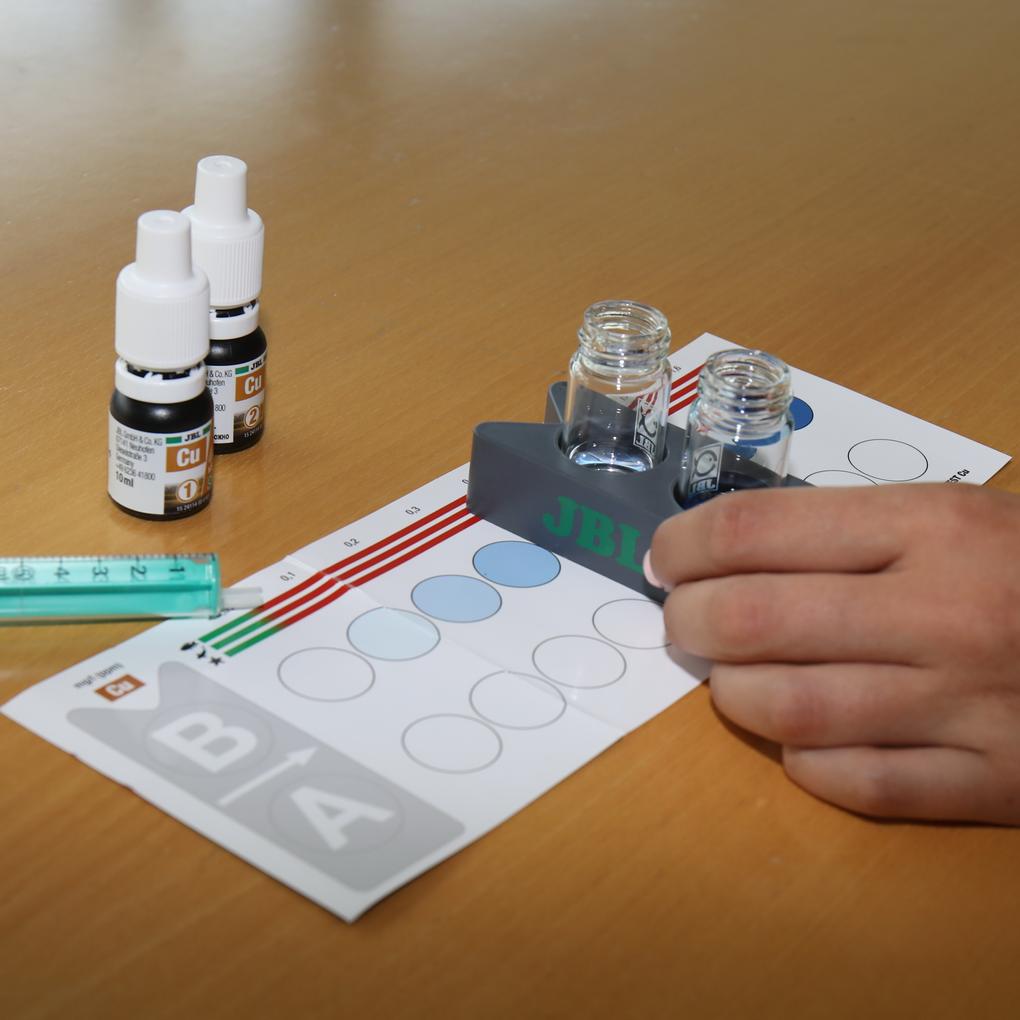
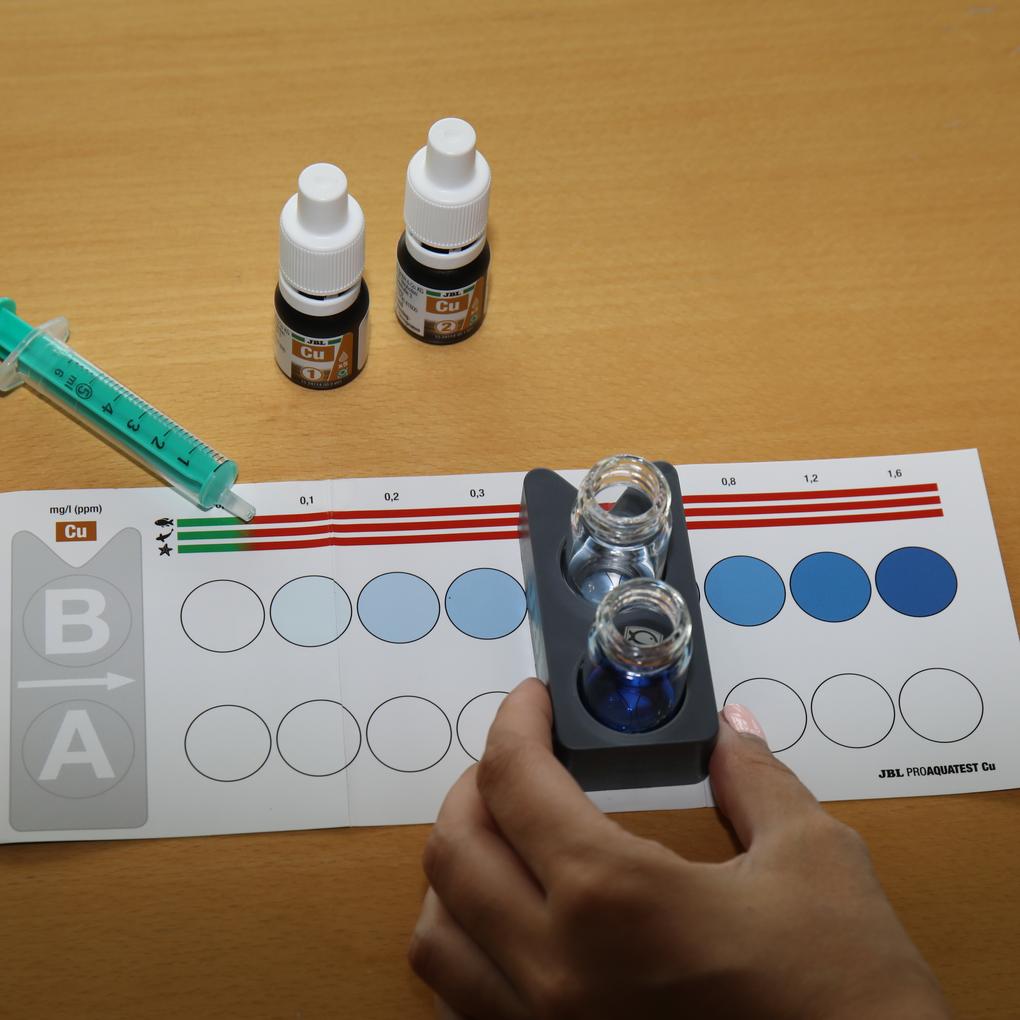
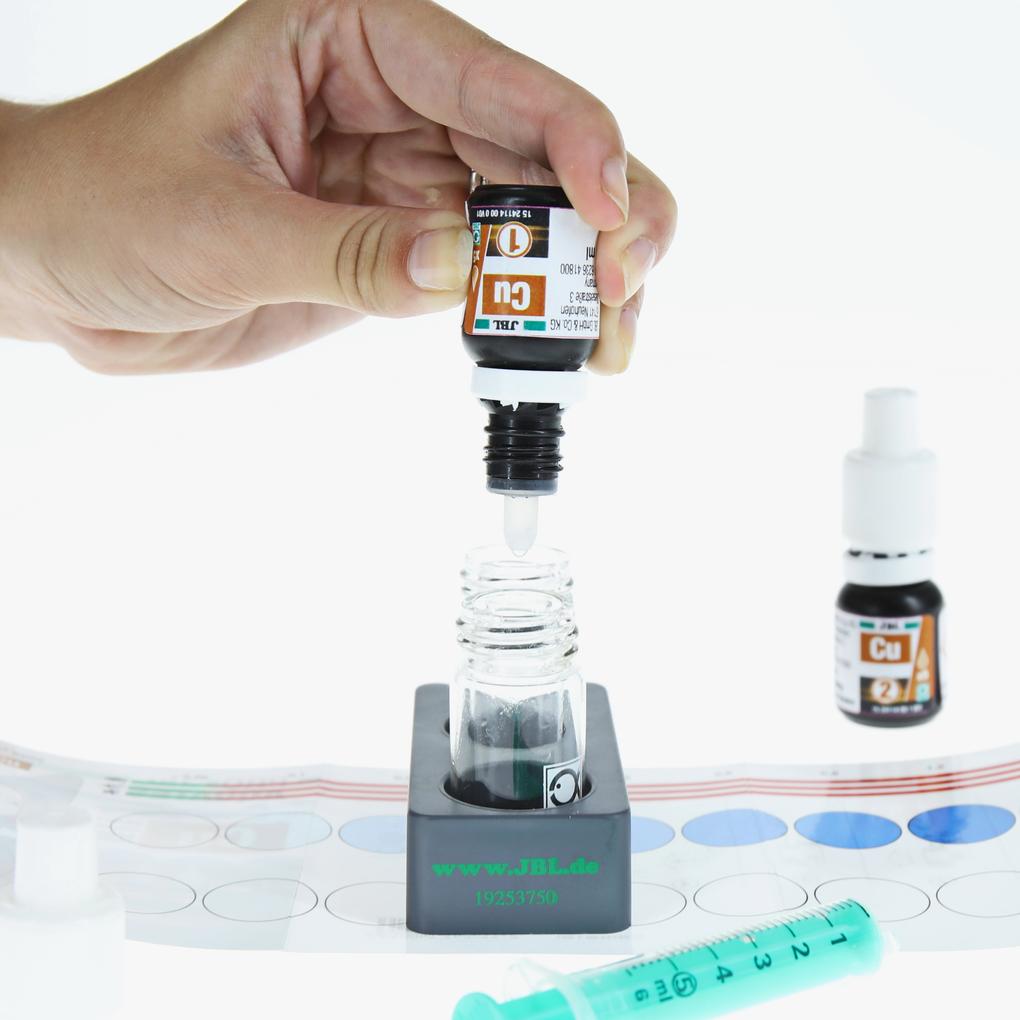
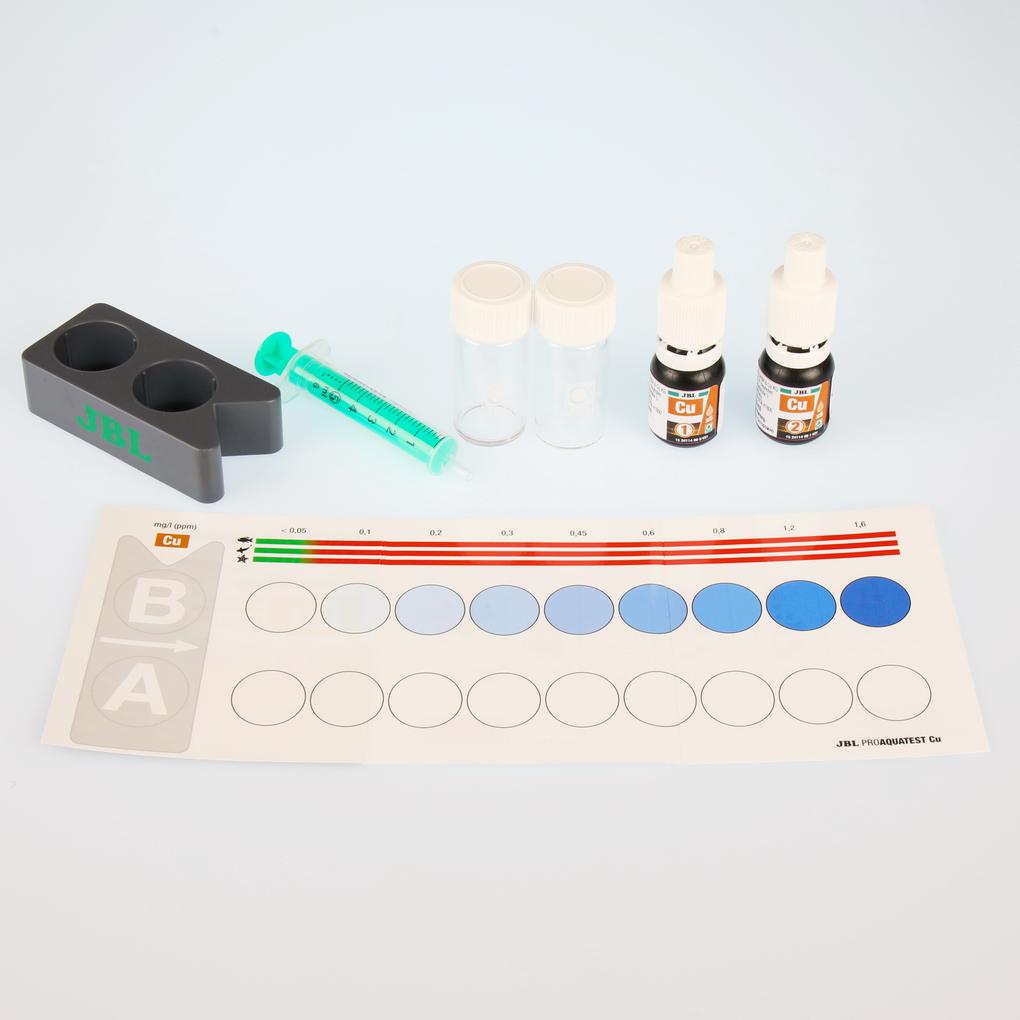
The colour charts are intended to be used with the comparator block. In addition, when the comparator block is used with the blank water sample, this compensates the inherent water colour._x000D_ _x000D_ Therefore, if the comparator block is not used, there will most likely be deviations in the readings.
The reason is often an incorrect use of the test. It is important to shake the test vigorously for precisely one minute. All the other important steps can be read in the instructions.
To answer this question some further information is required in order to detect any errors that may have occurred. _x000D_ _x000D_ 1) Are the reagents of the copper test still all right? (best-before date has not expired and it has not be opened longer than about 6 – 9 months.) _x000D_ _x000D_ 2) Has the medication expired? (The best-before date can be found on the bottom of the folding box or the bottle.) _x000D_ _x000D_ If the answer to the first question is yes and the answer to the second question is no, then please do the following: _x000D_ _x000D_ 1) Fill a 10 l bucket with tap water. _x000D_ 2) Carry out a copper test. The value should be 0 mg/l. _x000D_ 3) Dose JBL Oodinol 1000, following the instructions. _x000D_ 4) Stir the water thoroughly. _x000D_ 5) Carry out a copper test again. The value should be 0.3 mg/l. _x000D_ 6) If the test changes its colour it means both products are all right and the copper will then precipitate in the aquarium. _x000D_ _x000D_ Copper as a metal is exposed to various processes. These include, for instance: _x000D_ _x000D_ The precipitation of barely soluble copper salts. The copper mostly accumulates in the filter media. A good remedy for this is to replace the filter media and then repeat the dosage. _x000D_ _x000D_ Accumulation in the sediments. A good remedy for this is to carry out a substantial water change and suction off the sediment (use a gravel cleaner). Afterwards repeat the treatment according to the instructions. _x000D_ _x000D_ Consumption by organisms, especially aquatic plants (copper is an essential trace element for aquatic plants), is not usually an issue with the usual medical dosage.
The JBL PROAQUATEST Cu Copper measures copper which is free in the water. If the copper is bound (chelated) because it has been rendered harmless by a water conditioner (e.g. JBL Biotopol), it cannot be detected by the test. _x000D_ These complexes are so stable that they cannot be broken up in the aquarium. There is no longer any danger for aquarium inhabitants. Therefore, the test can no longer detect the copper. The compounds are removed during the water change by sucking off mulm or during filter cleaning.
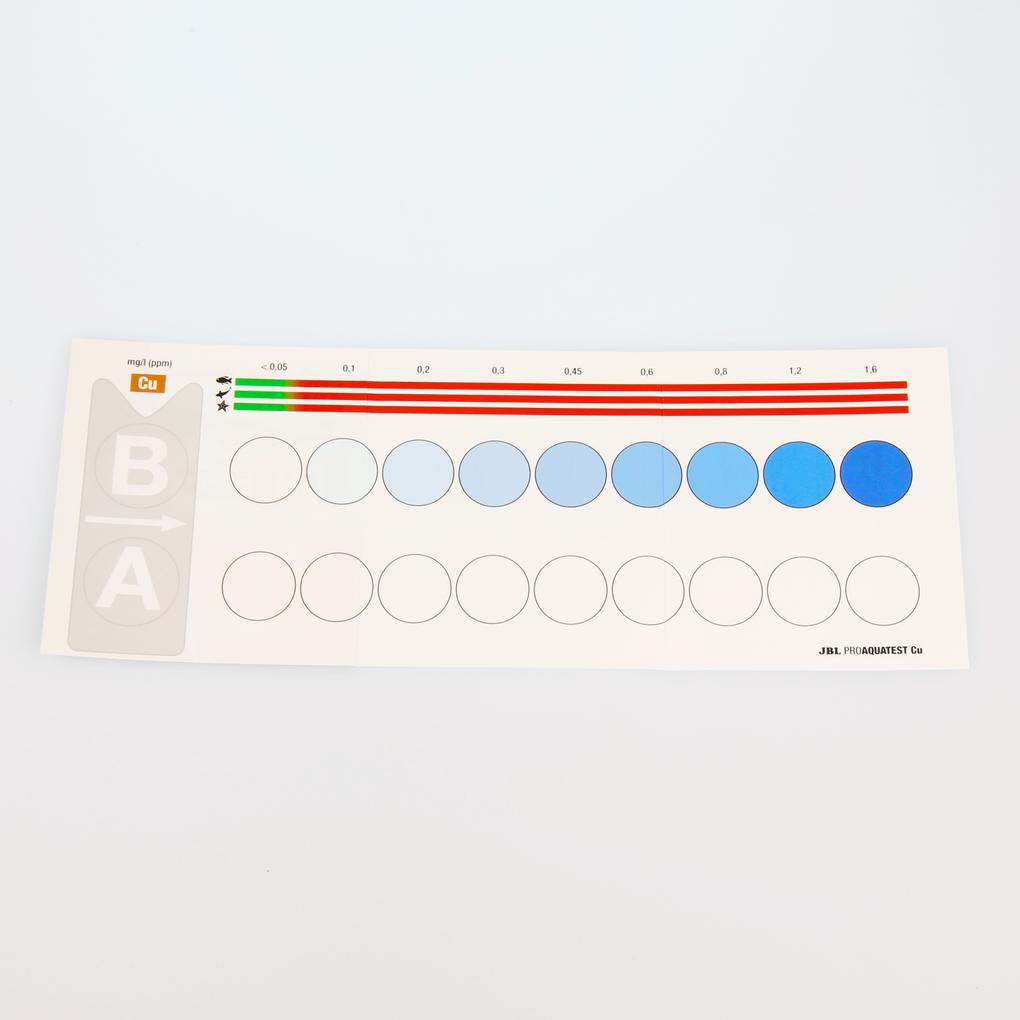
With the JBL PROAQUATEST drop tests you have a laboratory comparator system which compensates the inherent colouration of the water and at the same time enables non-chemists to carry out an accurate and safe water analysis. To ensure that water testing monitors the life of your fish and provides the greatest possible safety, you will find an evaluation adaptable to three different applications. _x000D_ _x000D_ Above the different coloured measuring points are numbers, three symbols and a colour band for each. _x000D_ _x000D_ The symbols stand for the following applications: _x000D_ Fish = freshwater _x000D_ Koi = garden pond _x000D_ Starfish = marine water _x000D_ _x000D_ The colour band tells you the meaning of the value determined in green (everything OK), yellow (attention) and red (need for action). In addition you will find numbers that reflect the value in mg/l for the respective colour field. _x000D_ _x000D_ The first two (freshwater and pond) colour bands belong to the upper number row. Marine water belongs to the lower number row. _x000D_ _x000D_ Why do the values differ? _x000D_ Due to the high salt concentration in marine water, the colouring of the reaction is not as intense as in freshwater (which also includes pond). Consequently, the value for the same colouration is greater than in freshwater _x000D_ _x000D_ Why do the recommendations differ? _x000D_ Every habitat reacts differently to certain nutrient concentrations. In the garden pond, for example, constantly changing temperatures and light intensity can jeopardise the value more than in freshwater, where, unlike in the pond, these factors are constant and necessary additives are supplied. That’s why the recommendations are green for one area of application, yet yellow for the other._x000D_ _x000D_
Have you lost your record sheets, used them all up, or need them in another language? _x000D_ In the appendix of this FAQ you will find PDF files for printing them out in German, English and French.
Stelle deine Frage an das JBL Service Team.