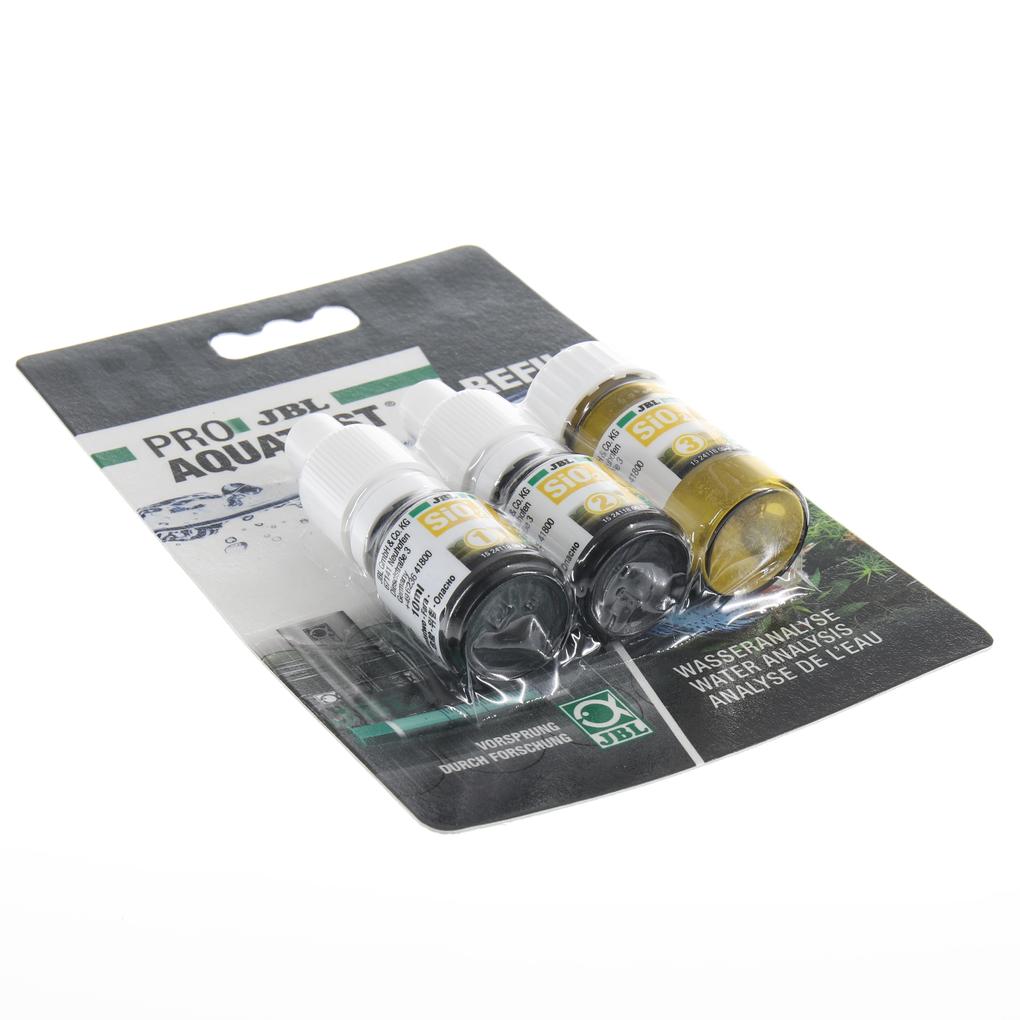
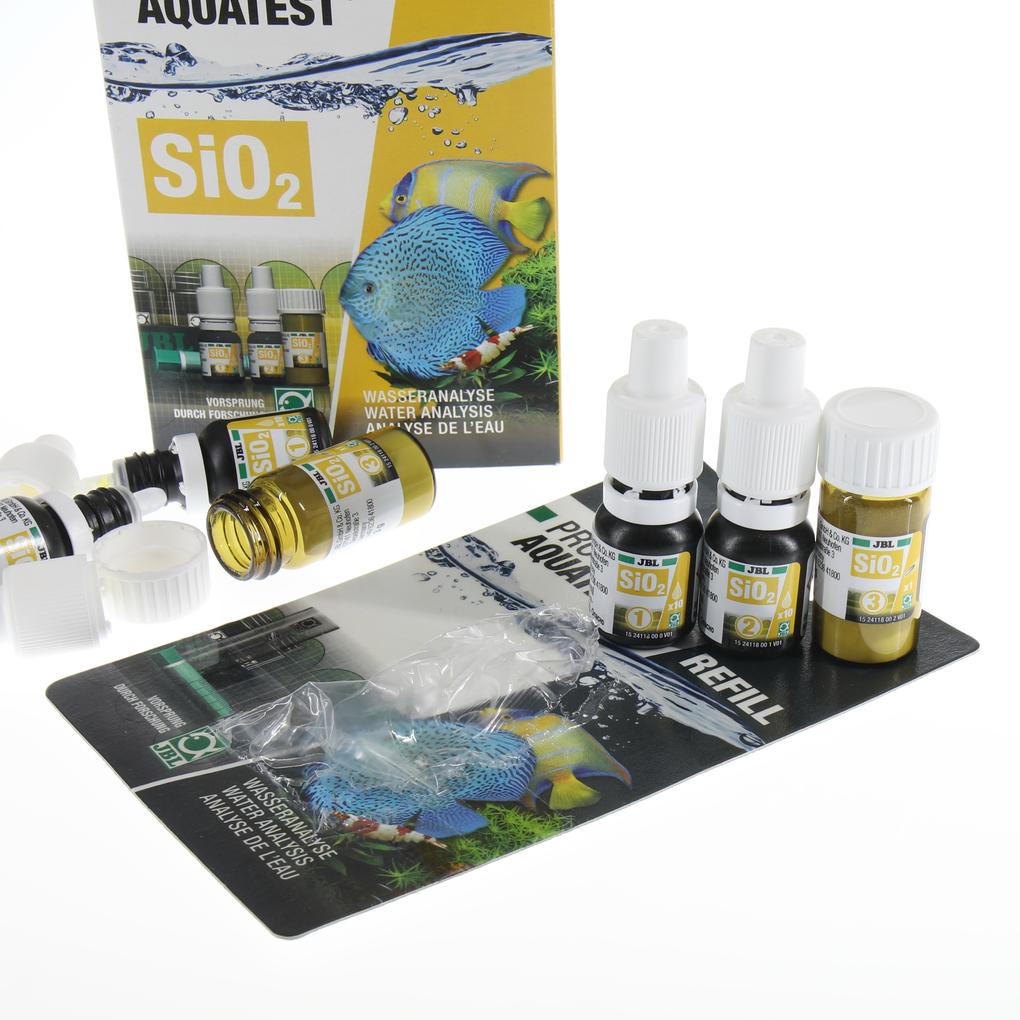
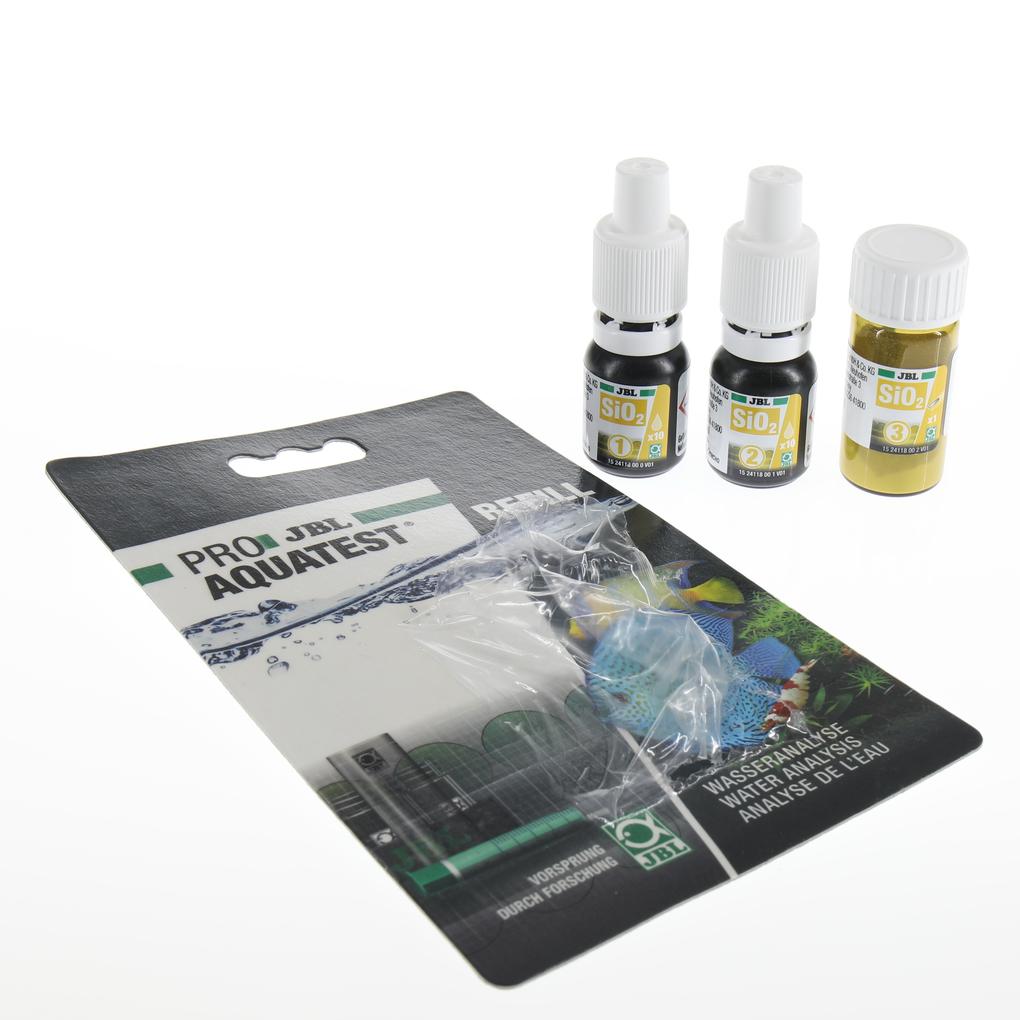
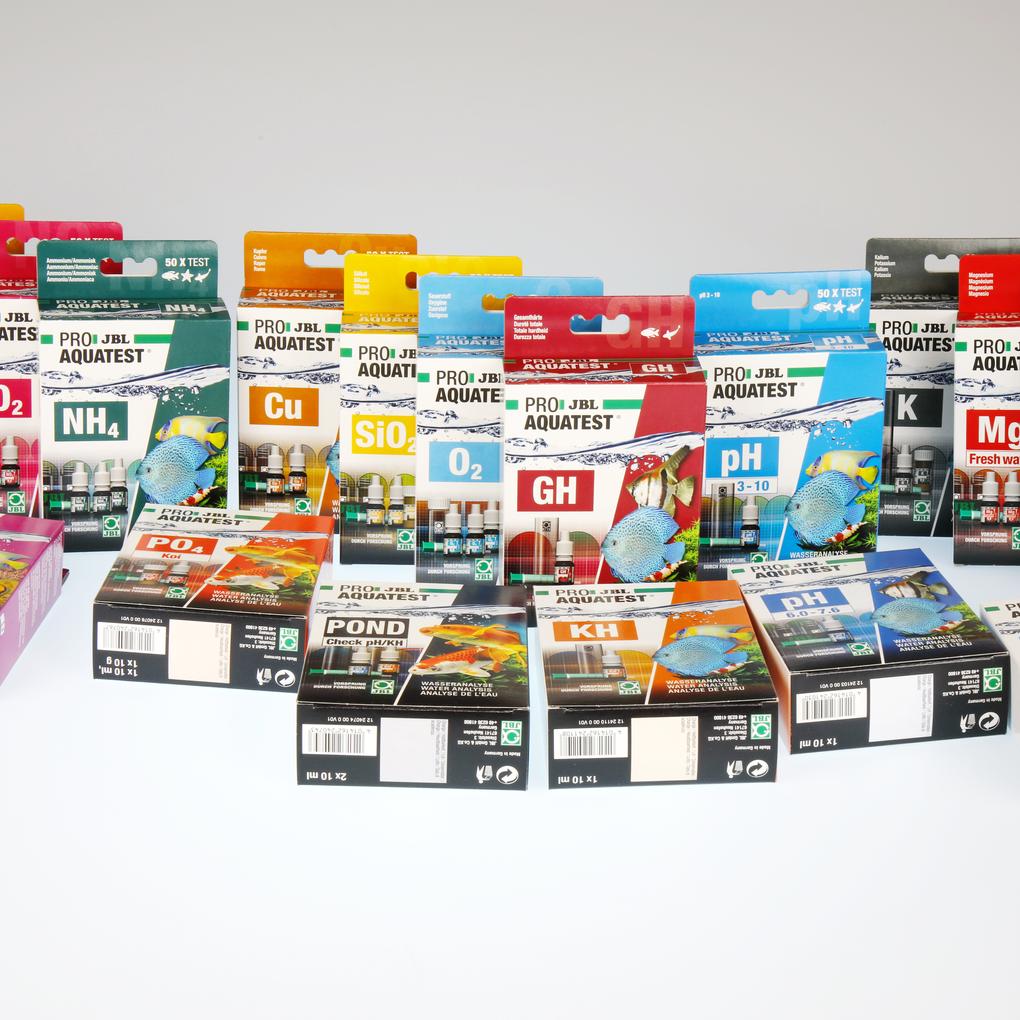
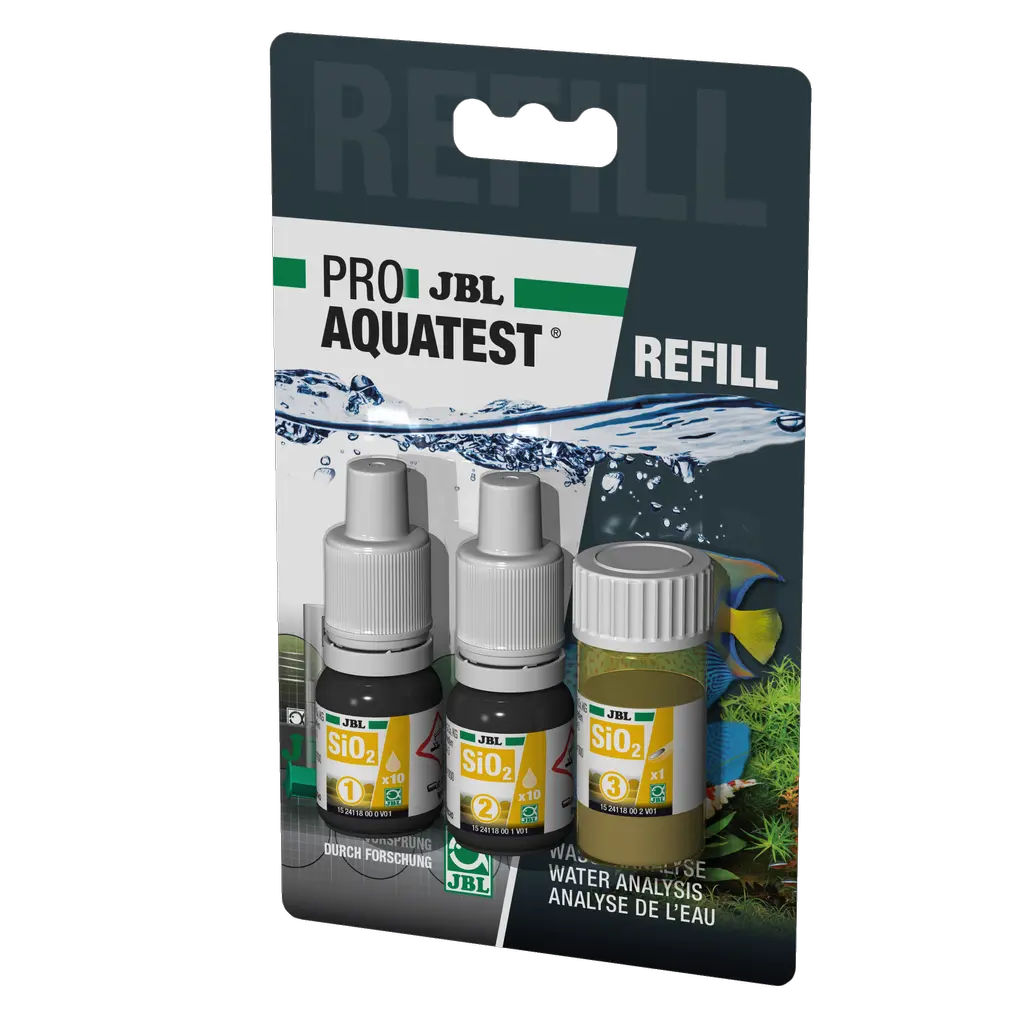
JBL PROAQUATEST SiO2 REFILL

Silicates (silicic acid) are the cause of unsightly diatoms. With this test, you can determine the silicate content for diatom control in freshwater and saltwater aquariums.

8.41 EUR

Price incl. 23 VAT plus Delivery
In stock – delivered to you in 1-3 business days
Shop locator Hazard statements

Product features

  • Silicates (silicic acid) are the cause of unsightly diatoms. With this test you determine the silicate content for diatom control in freshwater and marine aquariums
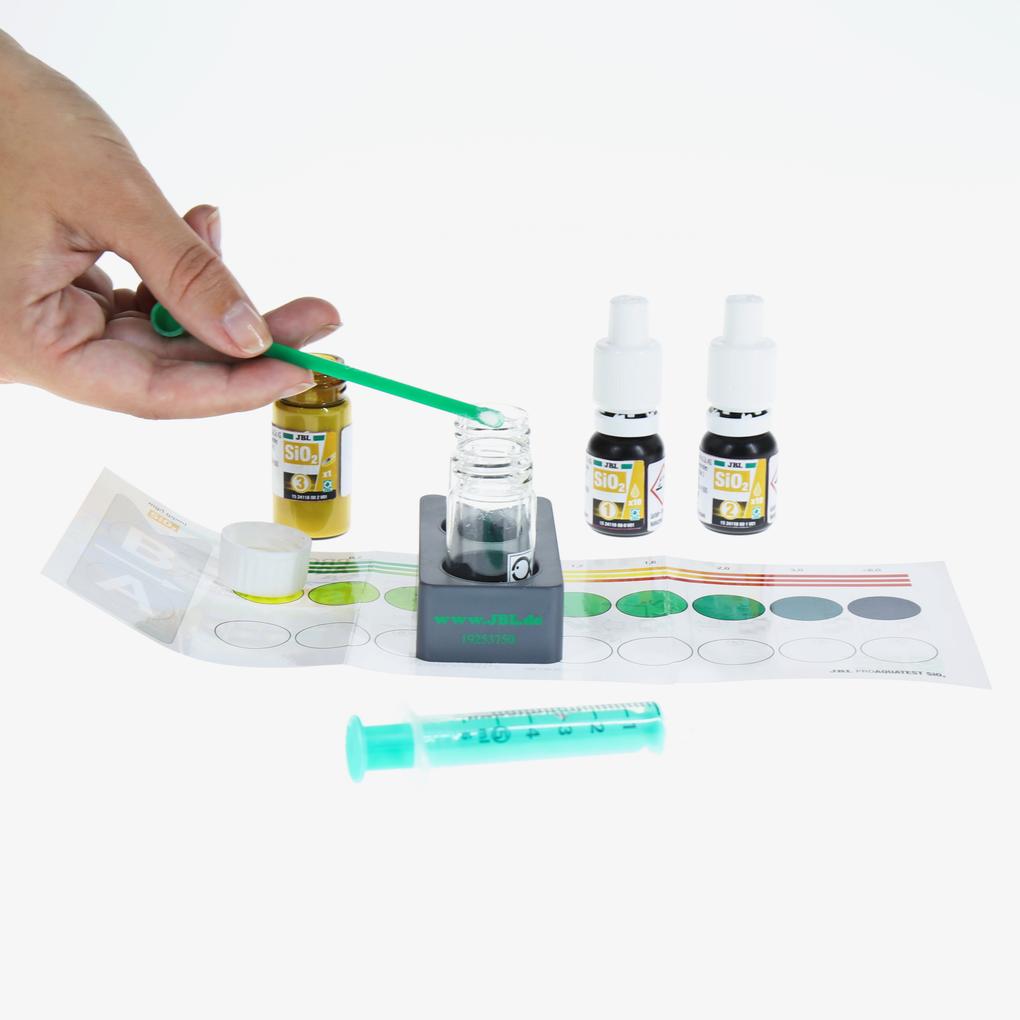
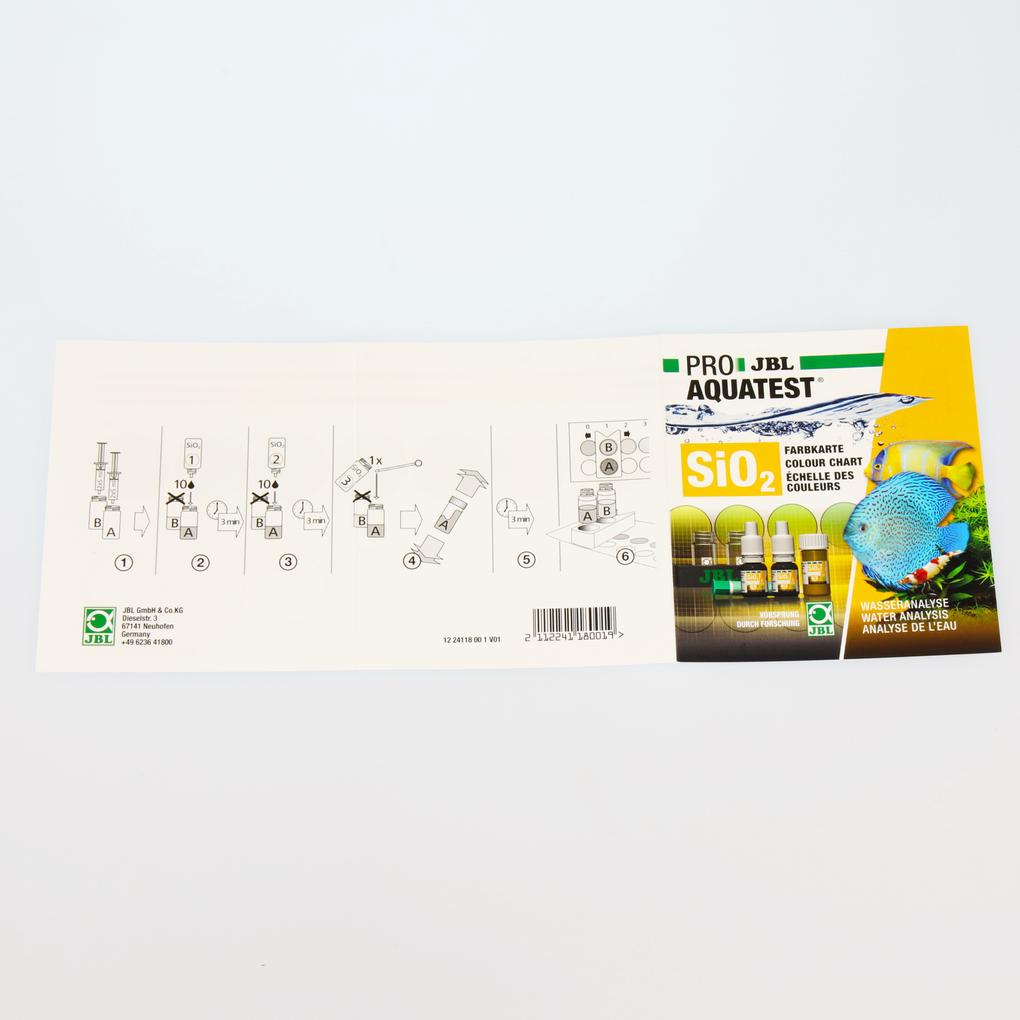
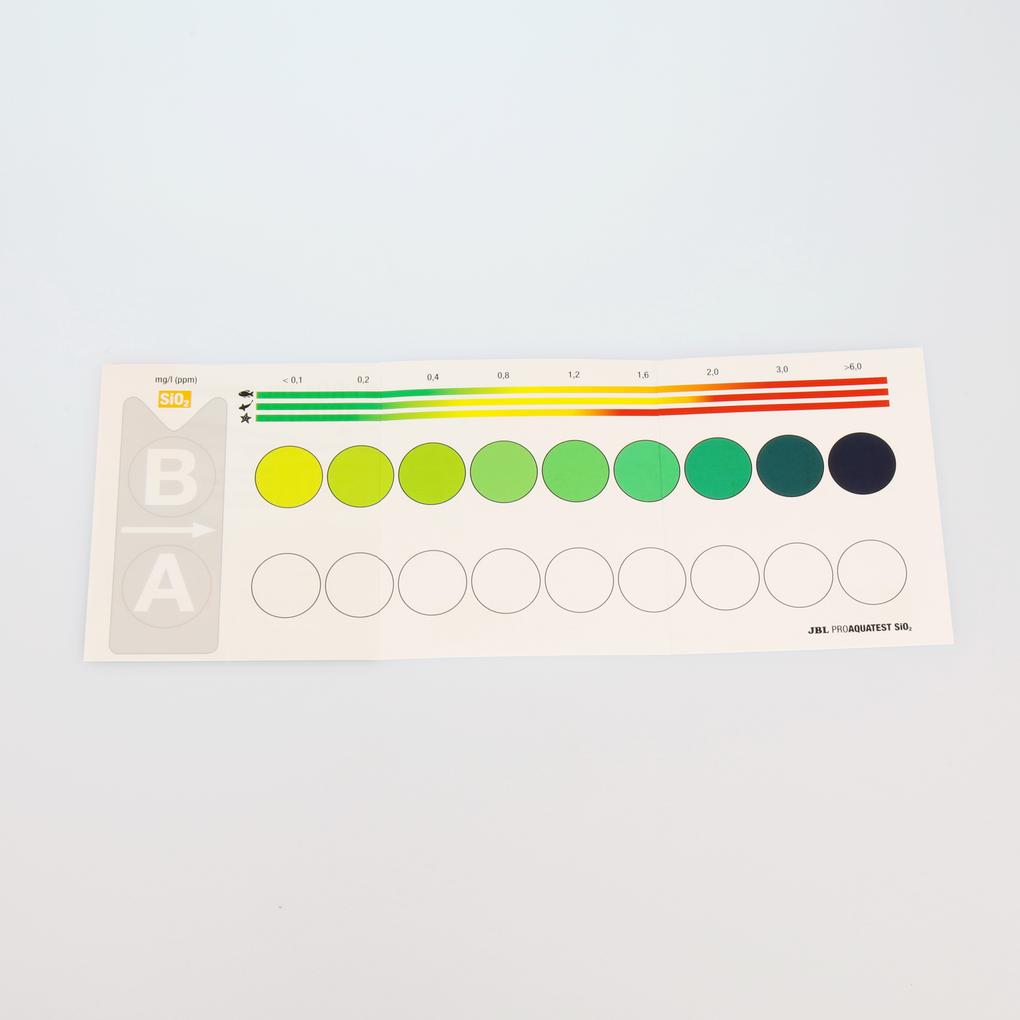
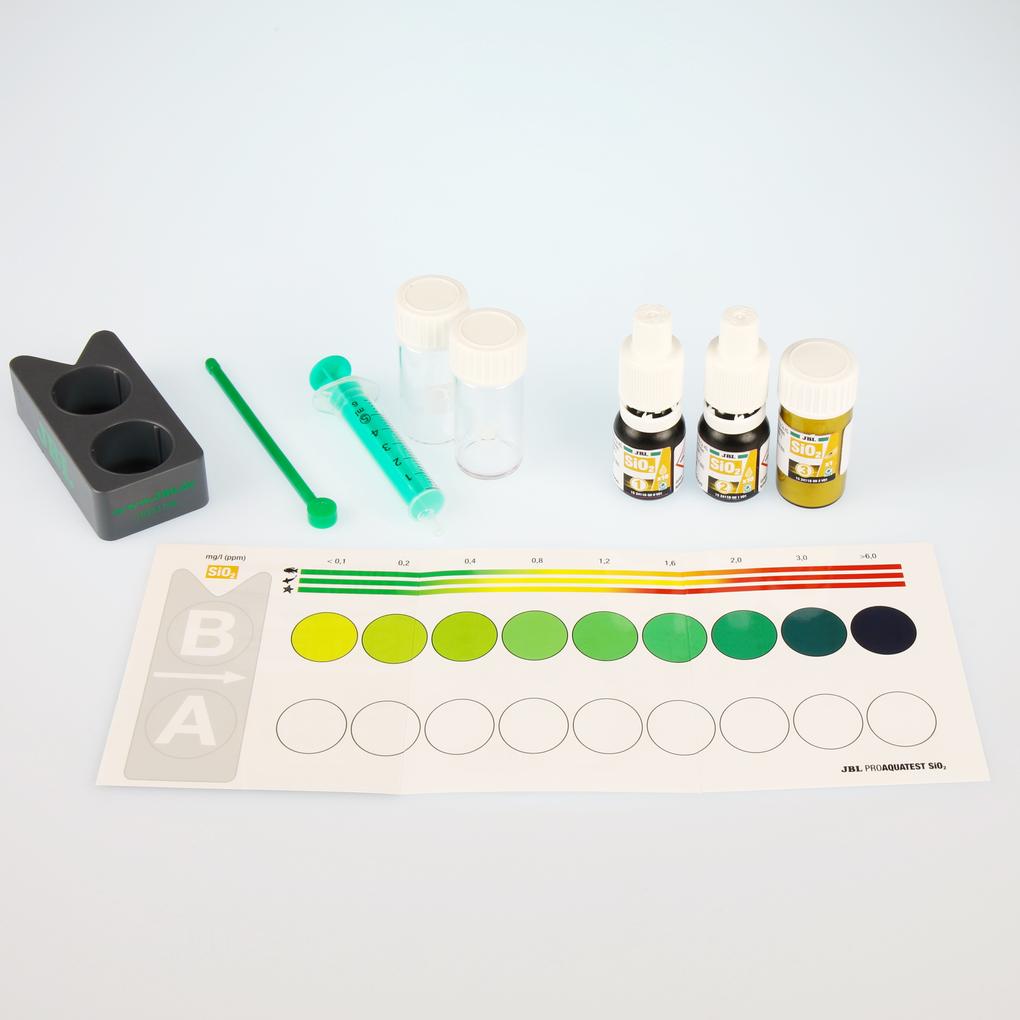
  • Laboratory comparator system to compensate the inherent water colour: fill glass vials with sample water, add reagents to one vial, place vials in holder, read values off colour chart
  • Use: when setting up a new aquarium, for checking tap water and during diatom problems
  • You will find detailed information and troubleshooting tips about water analysis on the JBL website in Essentials/Aquarium
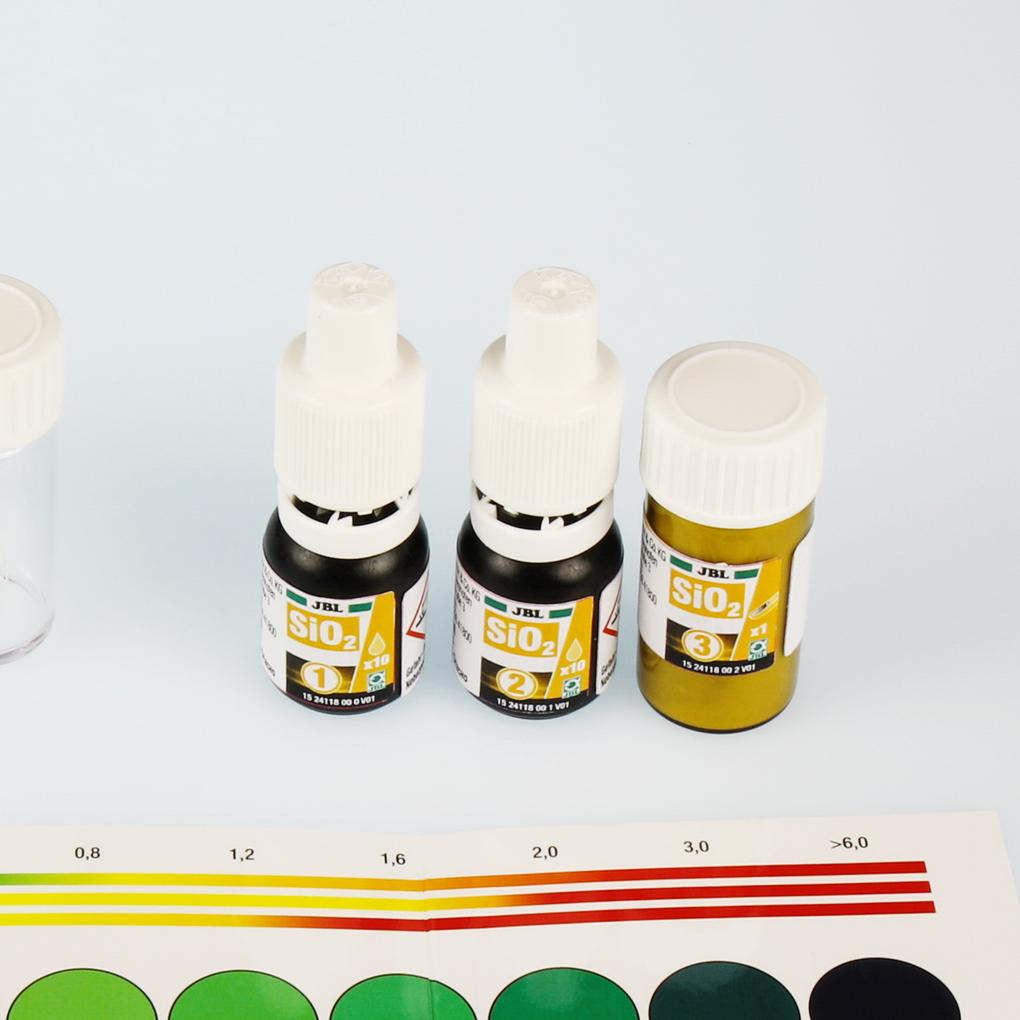
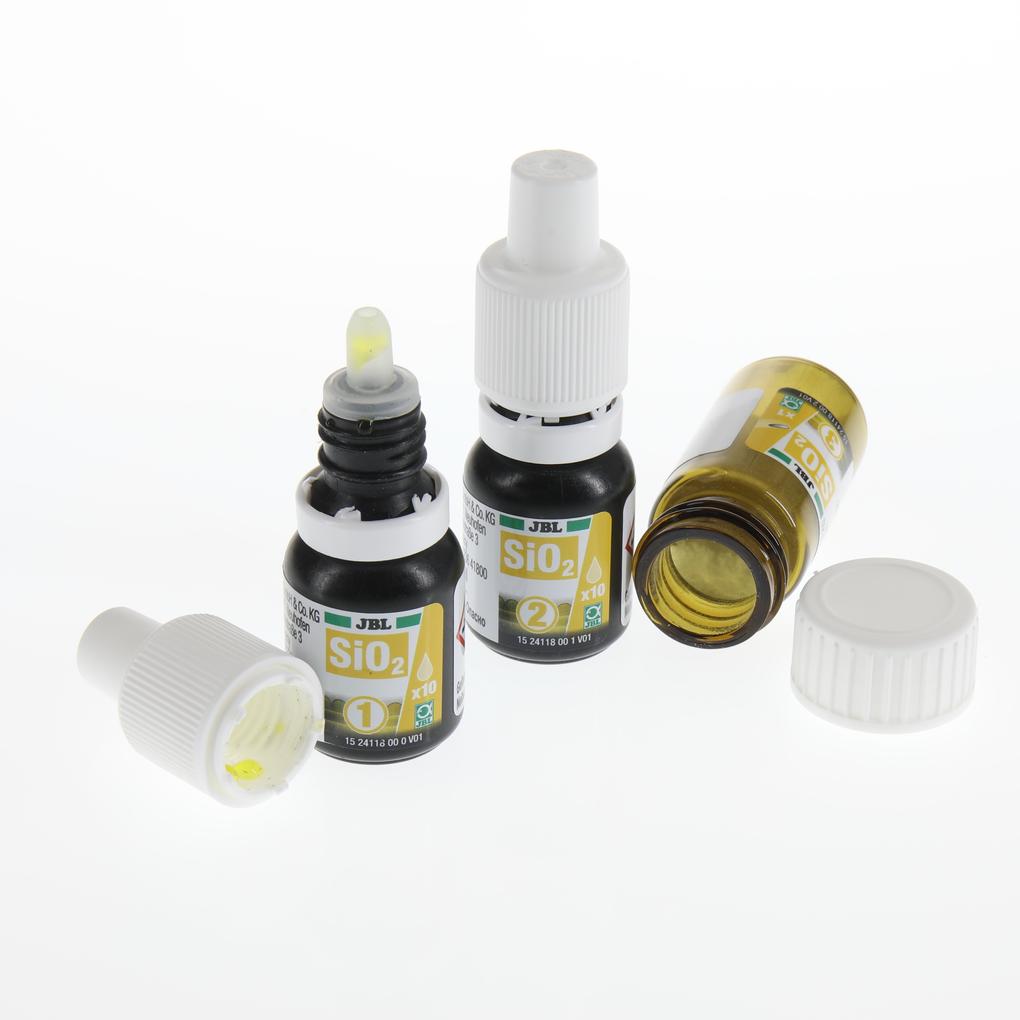
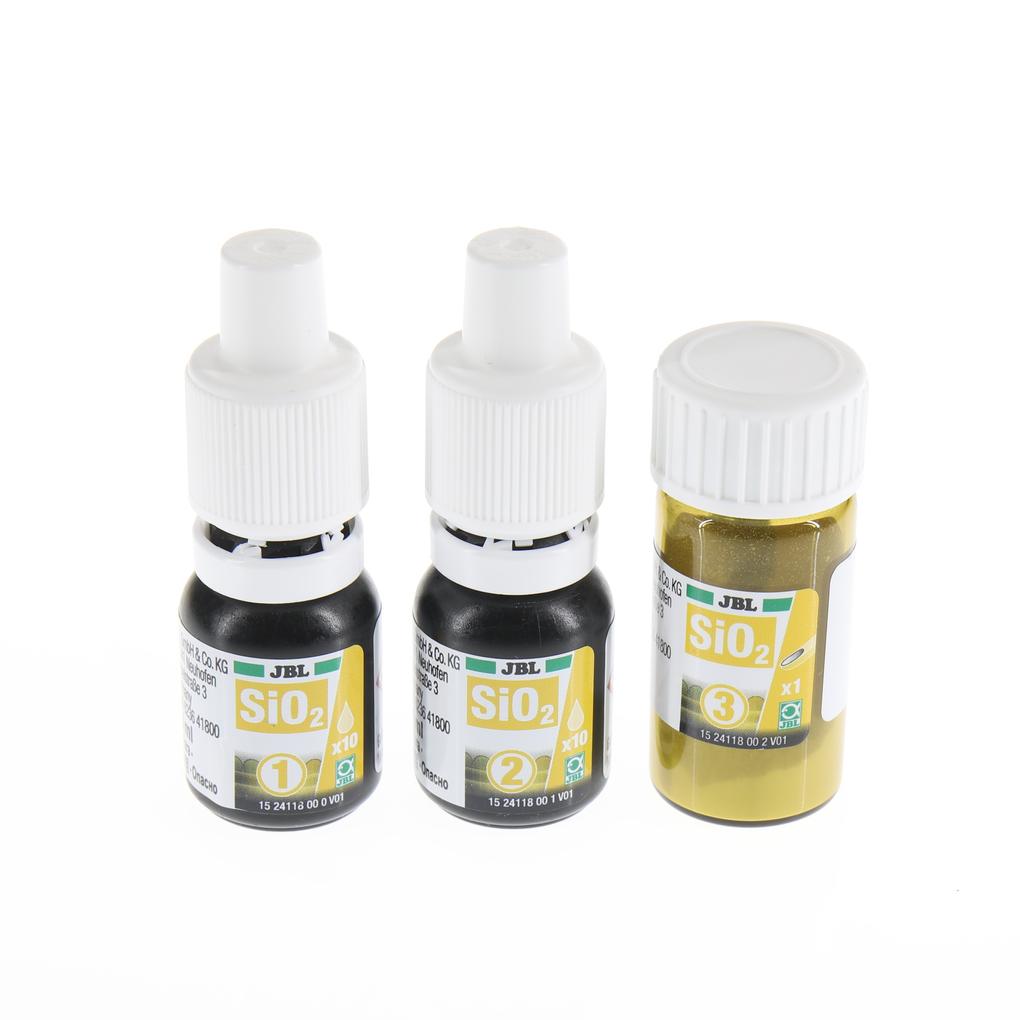
  • Package contents: 1 silicate test for approx. 50 measurements, incl. 2 reagents, 2 glass vials with screw caps, dosing spoon, syringe, comparator block and colour scale. Reagent refill separately available

Noch offene Fragen?

In unserem FAQ‑Bereich findet ihr Antworten auf die am häufigsten gestellten Fragen. Solltet ihr hier nicht fündig werden, zögert bitte nicht, uns direkt zu kontaktieren – wir helfen euch gerne weiter.

  • The instructions indicate that the comparator block should be used to compare colors. Is it not possible to do without it? Or is a factor from this approach required for the measurement?

    The color charts are designed for use with the comparator block. When using the comparator block with the blind water sample, any self-coloring of the water is compensated for. Without using the comparator block, deviations in the reading are therefore to be expected.

    War diese Antwort hilfreich?
  • My nitrate test provides me with measurement results that I cannot read or that are much too low.

    This is often due to incorrect use of the test. It is important to shake vigorously for exactly 1 minute. All other necessary steps are described in the instructions for use.

    War diese Antwort hilfreich?
  • Uneven consumption of individual water test reagents

    The liquids in one reagent are empty, but the powder is still half full. Can I just buy individual bottles? No, because JBL refill packs always contain all reagents as a set and should be replaced together. There is a reason for this. The reagents age when first opened and should therefore be disposed of completely as soon as one of the reagent bottles is empty. The uneven consumption is due to the fact that some test procedures require an individual number of drops, depending on the value present in the aquarium water. So some need more, others less. The liquids can be emptied completely. With the powder, you cannot remove the required amount if there is only a small amount left at the bottom. The quantity is therefore slightly more generous to ensure that the range is equally guaranteed even with low liquid consumption.

    War diese Antwort hilfreich?
  • After using JBL SilikatEx (rapid), the silicate level does not drop. The silicate test still shows a deep blue to black color, which means more than 6 mg/l silicate.

    A value of > 6 mg/l obtained in the silicate test means that more than 6 mg/l of silicates are present in the water. It is not possible to determine how much more silicate is present. It could be 10, 50 or even more mg/l of silicates. In many regions, tap water today contains silicate levels of more than 40 mg/l. More detailed information can be obtained from your water supplier or by diluting the water to be measured with silicate-free water, e.g. double-distilled water, before measuring. If osmosis water is used for dilution, the silicate content must also be determined. JBL Osmose 120 produces a permeate with 0.4 - 1.2 mg/l silicate from 40 mg/l silicate in the source water. With such high silicate values, the reducing effect of JBL SilikatEx can only be verified by diluting the water to be measured accordingly. 500 g of JBL SilikatEx binds approx. 5000 mg of silicate from the water. 400 g of JBL SilikatEx Rapid binds approx. 12000 mg of silicate from the water. Calculation example: 100 l aquarium with silicate in the initial water 50 mg/l: 100 l x 50 mg/l = 5,000 mg silicate.

    War diese Antwort hilfreich?
  • Where can I find the log sheets for documenting my water analysis?

    Have you lost your log sheets, already filled them all out, or need them in a different language? Attached to this FAQ, you will find a PDF file that you can print out in German, English, and French.

    War diese Antwort hilfreich?
  • Why are there different recommendations and values on the color chart of the water test?

    With JBL PROAQUATEST drop tests, you have a laboratory comparator system that compensates for the natural coloration of the water and enables non-chemists to perform accurate and reliable water analysis. To ensure that water testing monitors the health of your fish and provides the greatest possible safety, you will find a customized evaluation for three different applications. Above the different colored measuring points are numbers, three symbols, and a colored band. The symbols represent the following areas of application: Fish = Freshwater Koi = Garden pond Starfish = Saltwater The color band indicates the meaning of the measured value in green (everything OK), yellow (caution) and red (action required). In addition, you will find numbers that indicate the value in mg/l for the respective color field. The first two color strips (freshwater and pond) belong to the upper row of numbers, while seawater belongs to the lower row. Why do the values differ? Due to the high salt concentration in seawater, the color of the reaction is not as intense as in freshwater (including ponds). Consequently, the value is higher than in freshwater for the same color. Why do the recommendations differ? Each habitat reacts differently to certain nutrient concentrations. In garden ponds, for example, constantly changing temperatures and light intensity can make the value more critical than in freshwater, where these factors are constant and necessary additives ensure balance, which are not added to ponds. Therefore, the recommendations are green for one area of application and yellow for another.

    War diese Antwort hilfreich?

Antwort nicht gefunden?

Stelle deine Frage an das JBL Service Team.

Hazard statements

JBL SiO2 2 - Safety information according to GHS

Signal word: Danger

Hazard symbol(s)

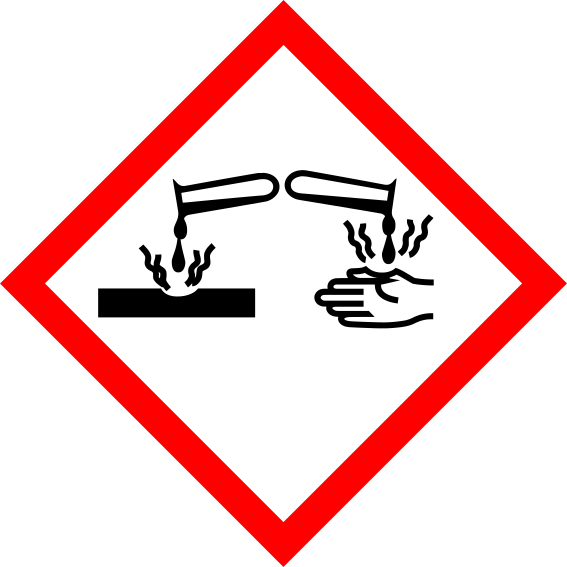
corrosive

UFI-Code

A820-A0QH-700H-1XHJ

Hazard statement(s)

  • H318: Causes serious eye damage.
  • H314: Causes severe skin burns and eye damage.

Safety instructions

  • P303+P361+P353: IF ON SKIN (or hair): Take off immediately all contaminated clothing. Rinse skin with water [or shower].
  • P101: If medical advice is needed, have product container or label at hand.
  • P102: Keep out of reach of children.
  • P305+P351+P338: IF IN EYES: Rinse cautiously with water for several minutes. Remove contact lenses, if present and easy to do. Continue rinsing.
  • P501a: Dispose of contents/container in accordance with local regulations.

Hazard-determining component(s)

  • 87-69-4: (+)-tartaric acid

JBL SiO2 1 - Safety information according to GHS

Signal word: Danger

Hazard symbol(s)

corrosive

UFI-Code

Y520-U013-X001-CKXG

Hazard statement(s)

  • H318: Causes serious eye damage.
  • H314: Causes severe skin burns and eye damage.

Safety instructions

  • P303+P361+P353: IF ON SKIN (or hair): Take off immediately all contaminated clothing. Rinse skin with water [or shower].
  • P101: If medical advice is needed, have product container or label at hand.
  • P102: Keep out of reach of children.
  • P305+P351+P338: IF IN EYES: Rinse cautiously with water for several minutes. Remove contact lenses, if present and easy to do. Continue rinsing.
  • P501a: Dispose of contents/container in accordance with local regulations.

Hazard-determining component(s)

  • 7664-93-9: sulphuric acid

Information and consent to cookies & third-party content

We use technically necessary cookies/tools to offer, operate and secure this service. Furthermore ,with your express consent , we use cookies/tools for marketing, tracking, creating personalised content on third-party sites and for displaying third-party content on our website. You can revoke your consent at any time with effect for the future via the menu item ‘Cookie settings’.
By clicking on ‘Allow all’, you give us your express consent to the use of cookies/tools to improve the quality and performance of our service, for functional and personalised performance optimisation, to measure the effectiveness of our ads or campaigns, for personalised content for marketing purposes, including outside our website. This enables us to provide personalised online ads and extended analysis options about your user behaviour. This also includes accessing and storing data on your device. You can revoke your consent at any time with effect for the future via the menu item ‘Cookie settings’.
You can use the ‘Change settings’ button to grant and revoke individual consent to the cookies/tools and receive further information on the cookies/tools we use, their purposes and duration.
By clicking on ‘Only absolutely necessary’, only technically necessary cookies/tools are used.

Our data protection declaration tells you how we process personal data and what purposes we use the data processing for.
PUSH messages from JBL

What are PUSH messages? As part of the W3C standard, web notifications define an API for end-user notifications that are sent to the user's desktop and/or mobile devices via the browser. Notifications appear on the end devices as they are familiar to the end user from apps installed on the device (e.g. emails). Notifications appear on the end user’s device, just like an app (e.g. for emails) installed on the device.

A notification makes it possible to inform the user about an event outside the context of a website, such as a new blog post, a competition or a voucher.

These notifications enable a website operator to contact its users whenever they have a browser open - it doesn’t matter whether the user is currently visiting the website or not.

To be able to send web push notifications, all you need is a website with a web push code installed. This allows brands without apps to take advantage of many of the benefits of push notifications (personalised real-time communications at just the right moment).

Web notifications are part of the W3C standard and define an API for end user notifications. A notification makes it possible to inform the user about an event, such as a new blog post, outside the context of a website.

JBL GmbH & Co. KG provides this service free of charge, and it is easy to activate or deactivate.