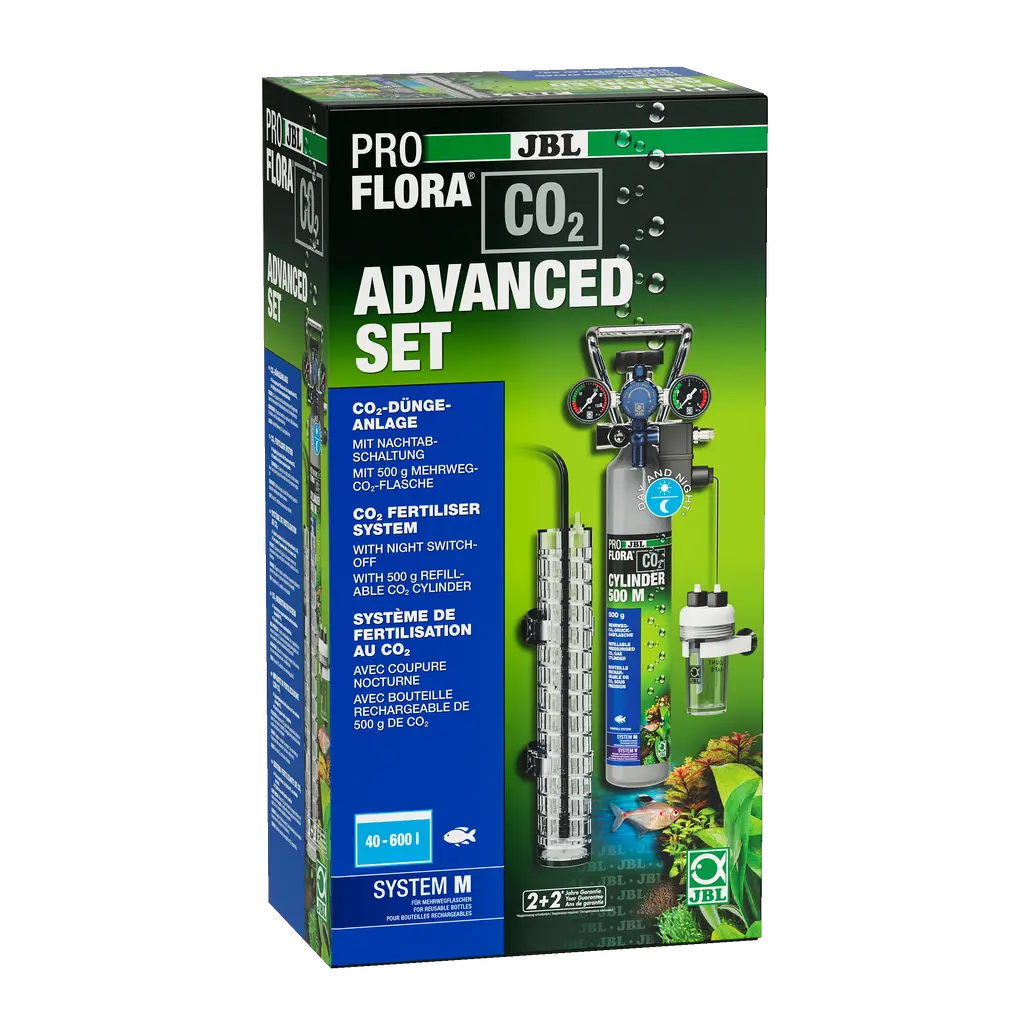
JBL PROFLORA CO2 ADVANCED SET M
In unserem FAQ‑Bereich findet ihr Antworten auf die am häufigsten gestellten Fragen. Solltet ihr hier nicht fündig werden, zögert bitte nicht, uns direkt zu kontaktieren – wir helfen euch gerne weiter.
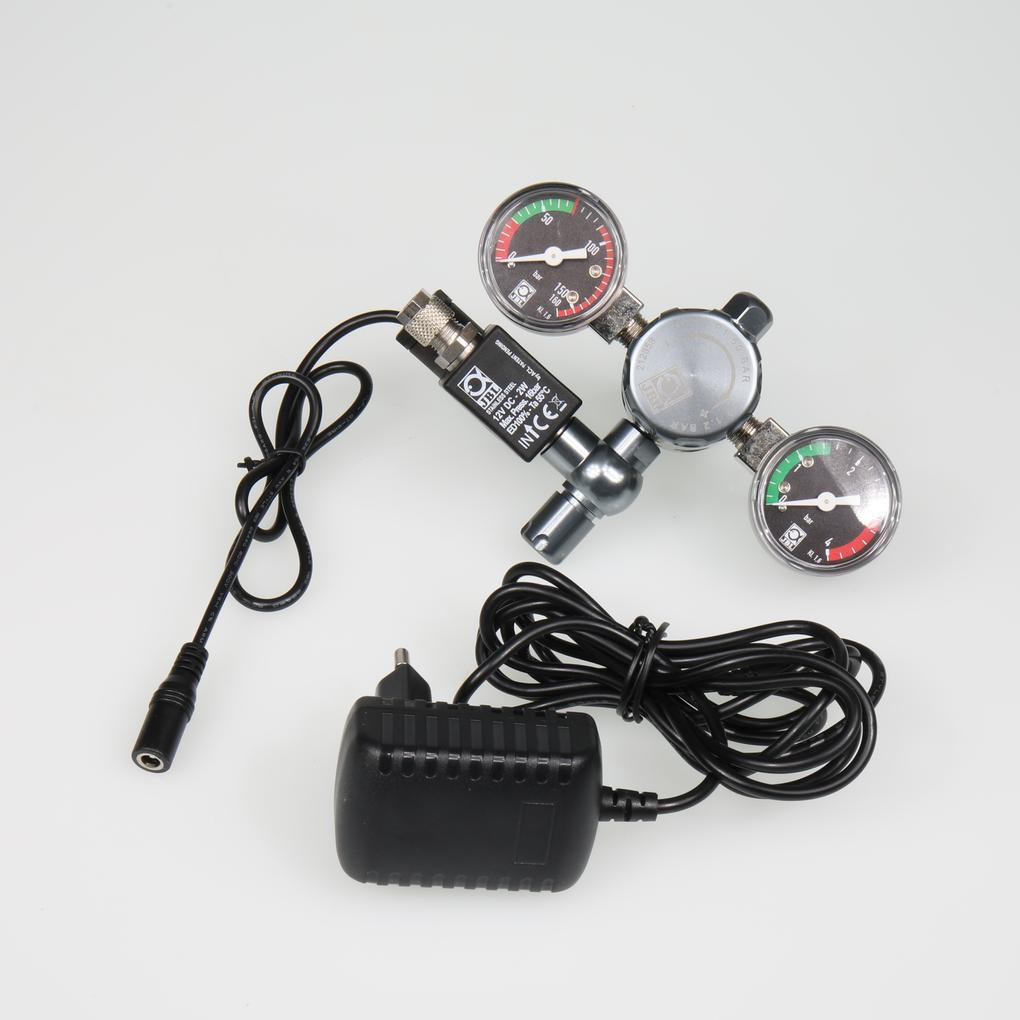
When adjusting the working pressure, the CO2 addition must be active. Otherwise, the change will not be immediately visible when the pressure is reduced. An increase will also be visible without CO2 running, but not immediately. Therefore, you should ensure that CO2 is being added during the adjustment process whenever you reduce or increase the pressure.
Yes, this behavior is normal. The CO2 is liquefied under pressure in the gas cylinder. At 20°C, the pressure is 57 bar. If the contents decrease slowly and the temperature falls/rises, this can also affect the working pressure. Check the cylinder pressure, as the cylinder is probably almost empty.
Two points to note: 1) Bottle: Reusable bottles have a TÜV test stamped on them. This test must be renewed every 10 years, during which the bottle bases and the valve seal and screw connection are checked. 2) Carbon dioxide: Carbon dioxide is harmful depending on its concentration in the air. At a carbon dioxide concentration of 3-5%, breathing and pulse rates increase. Other symptoms include headaches, discomfort, and ringing in the ears. At carbon dioxide concentrations of 8-10% and above, these symptoms increase. This can result in cramps, fainting, respiratory arrest, and death by suffocation. A 500 g cylinder contains 500 g of CO2. This is equivalent to 11.36 mol (chemical unit of quantity). Under normal conditions (273.15 K, 101325 Pa), has a volume of 22.414 l, which means that 500 g of CO2 has a volume of 254.7 l. CO2 is heavier than air and therefore collects at the bottom. In a 20 m² room, this corresponds to a CO2 height in the room of 12.735 mm = 1.27 cm. When completely mixed with the air in a 20 m² room with a height of 2.5 m (equivalent to 50,000 l), this corresponds to a maximum gas concentration of 0.5% by volume, which is well below the level at which harmful effects occur.
In line with the motto "better safe than sorry," some aquarium owners install several check valves in the same circuit. If you use the JBL PROFLORA direct inline diffuser or the JBL PROFLORA CO2 Count Safe bubble counter, for example, you already have an integrated check valve. If you use a separate check valve (JBL PROFLORA SafeStop) in addition, problems may arise when opening the check valves. This effect can be observed if the addition does not start again automatically after the night shut-off or interruption of the supply with the controller. Please note that, depending on the working pressure and the number of bubbles, it may take a few minutes between the start of the addition and the visible entry of CO2 into the aquarium. Each spring in a check valve requires a certain amount of pressure to open. Multiple springs can therefore interfere with each other and, depending on the distance between the two check valves, reduce the pressure on the spring to such an extent that it remains closed. Therefore, please always use only one check valve for your CO2 installation.
All check valves and backflow preventers from JBL require a working pressure of at least 0.6 bar for the valve to open. This feature is found in the JBL PROFLORA CO2 TAIFUN SAFESTOP, COUNTSAFE, and INLINE. The JBL PROFLORA TAIFUN diffusers also all work with this pressure. A higher working pressure is not necessary, which is why all accessories also work with the JBL PROFLORA BIO SETs (except JBL PROFLORA CO2 STARTER BIO SET). Depending on the installation, long hoses and other components may require a slightly higher working pressure than 0.6 bar, which is why the default setting of 1.2 bar is sufficient in all cases.
Yes, JBL PROFLORA CO2 products are designed exclusively for use in aquariums. The gas supplied promotes plant growth and can be adjusted with fine precision so that even the smallest quantities can be added to the aquarium. This ensures constant operation and the safety of the fish.
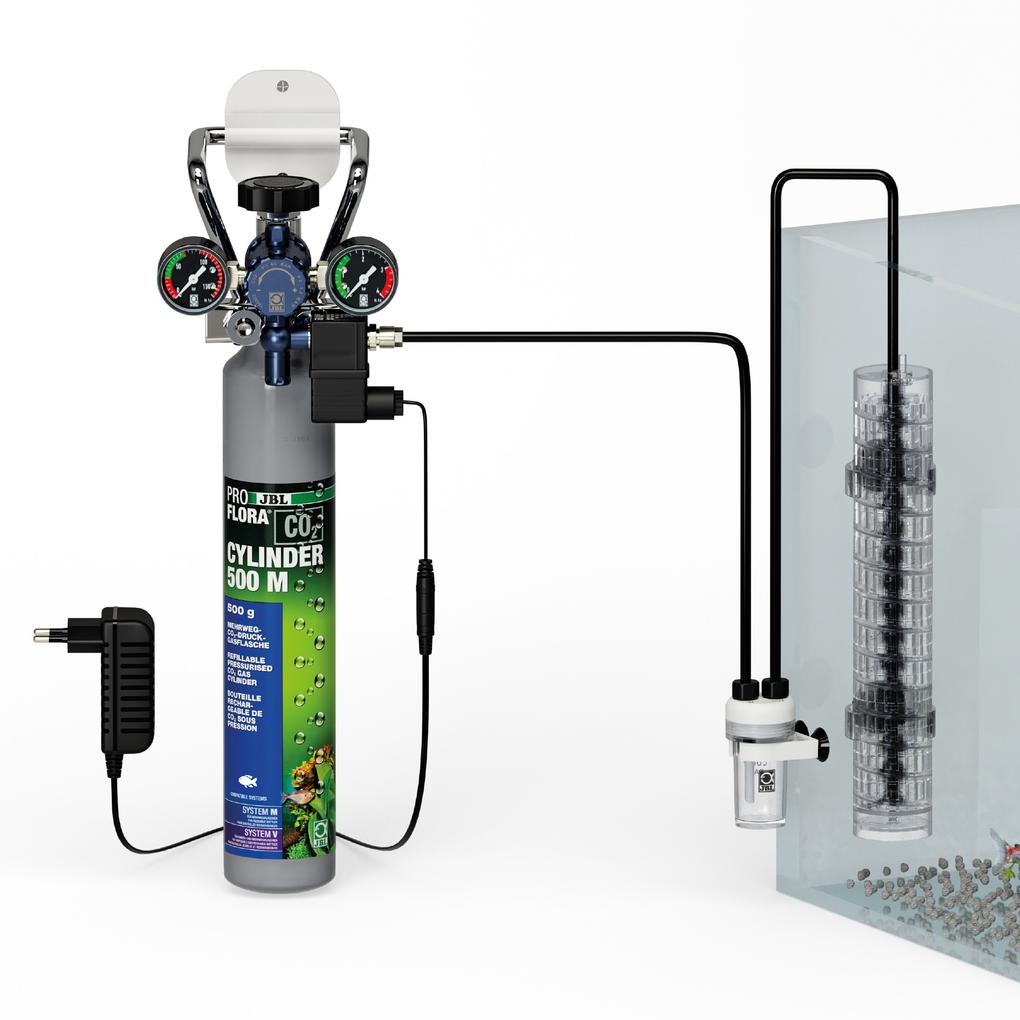
Your system is probably still under pressure. Close the cylinder valve and disconnect the CO2 hose from the pressure regulator. Open the adjustment screw and release the pressure remaining in the pressure regulator until both pressure gauges read 0 bar. Loosen the connection nut of the pressure regulator from the cylinder valve.
For a long time, JBL CO2 pressure regulators had a preset working pressure of 1.5 bar. This has become established in people's minds. With the new JBL PROFLORA CO2 pressure regulators with pressure gauges, the working pressure is set to 0 bar upon delivery. You open the addition via the large adjustment knob for the working pressure and turn it until the desired working pressure is reached. The maximum setting here is approx. 1.2 bar. A minimum of 0.6 bar is required for the operation of all JBL check valves and backflow preventers. This ensures that the check valve opens. A higher working pressure is not necessary, which is why all accessories also work with the JBL PROFLORA BIO SETs. Many CO2 accessories available on the market specify very different working pressures. For safety reasons, the standard market value of 1.5 bar is specified. The working pressure required is usually the same as that specified for JBL PROFLORA CO2 accessories. Only a few exceptions require a working pressure of over 2 bar and these are very special technical components.
No, under no circumstances should a tool be used. Using a tool may cause damage. There is a thin pin at the tip of the needle valve. If the needle valve is closed clockwise and turned too tightly or with a tool, it may break off and damage the pressure control valve
No, no tools are required and should not be used under any circumstances. Using a tool may cause damage. You can attach the pressure reducer to the CO2 cylinder with your hands. Turn it until you feel resistance and then turn it about half a turn further. The pressure regulator will then be securely in place. When attaching the regulator to disposable cylinders, you will hear a short hissing sound.
Stelle deine Frage an das JBL Service Team.