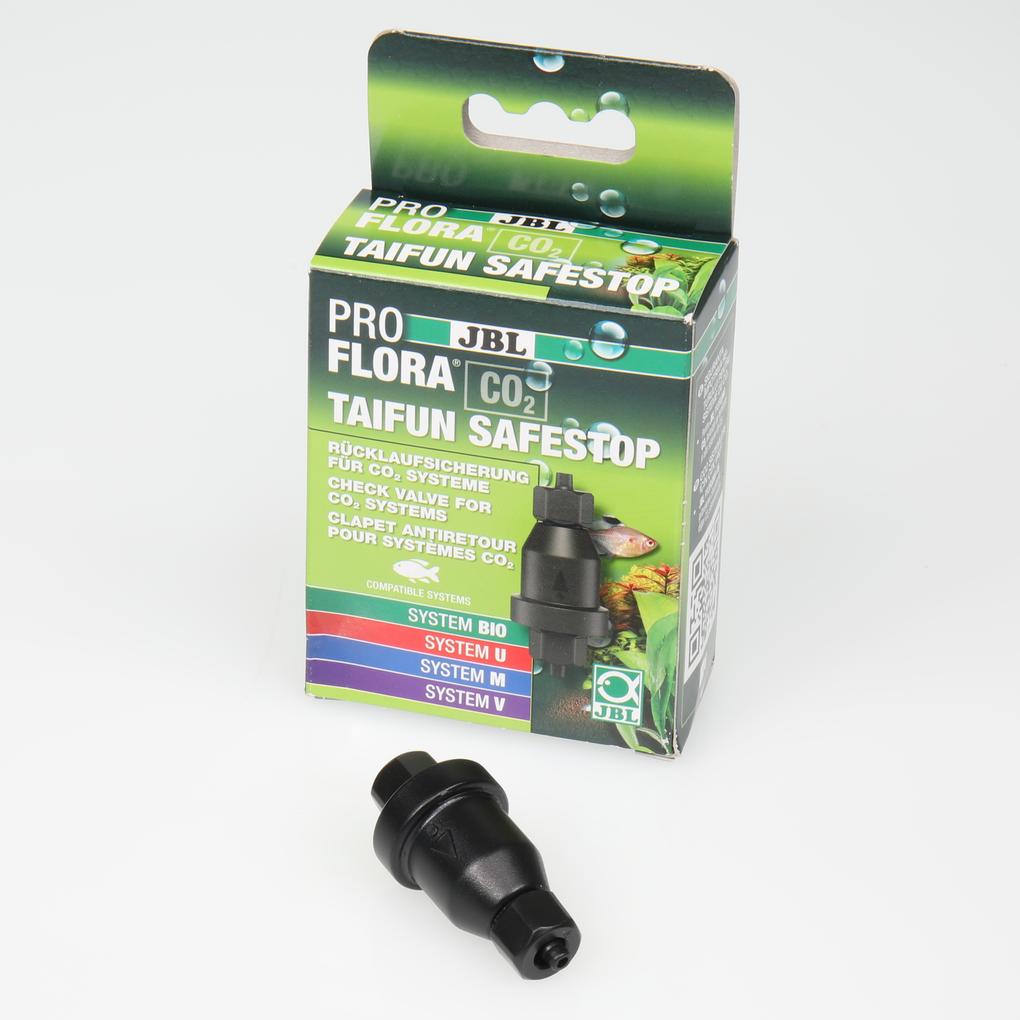
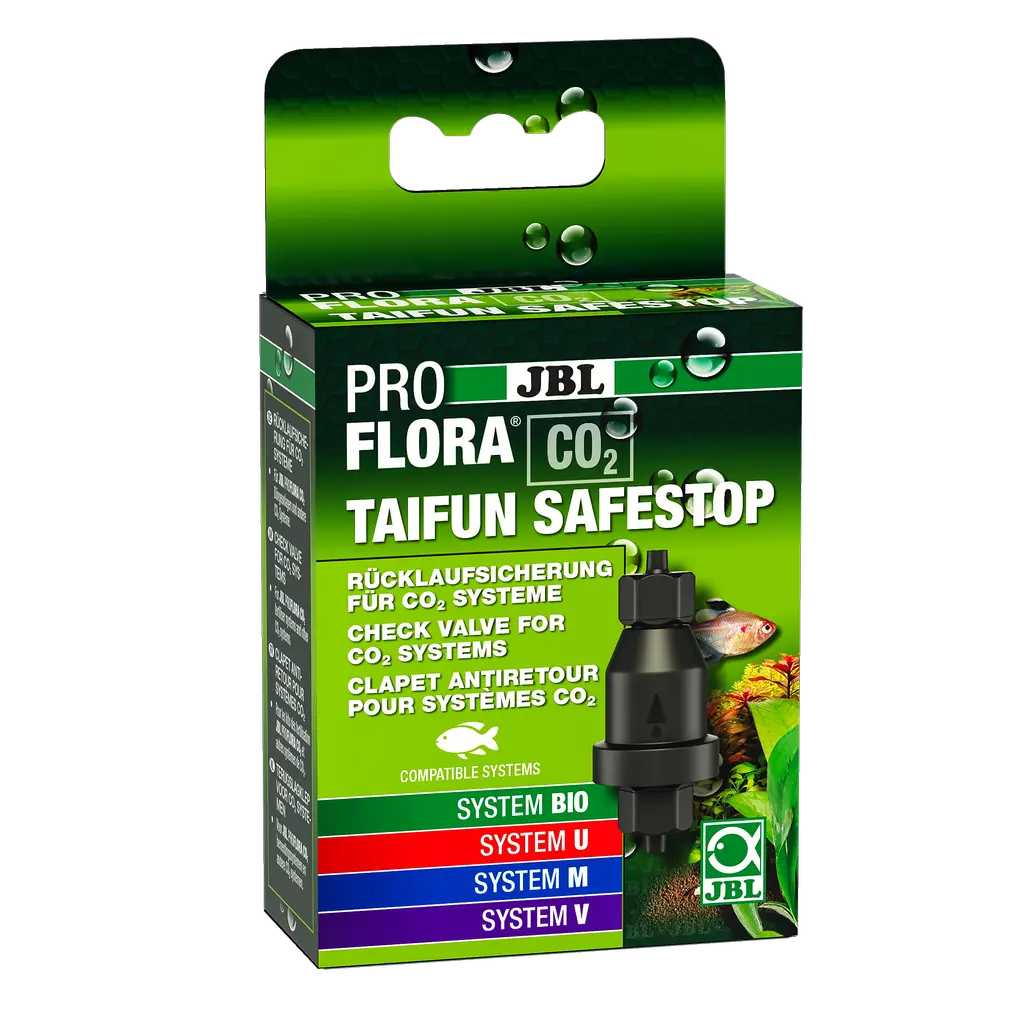
JBL PROFLORA CO2 TAIFUN SAFESTOP

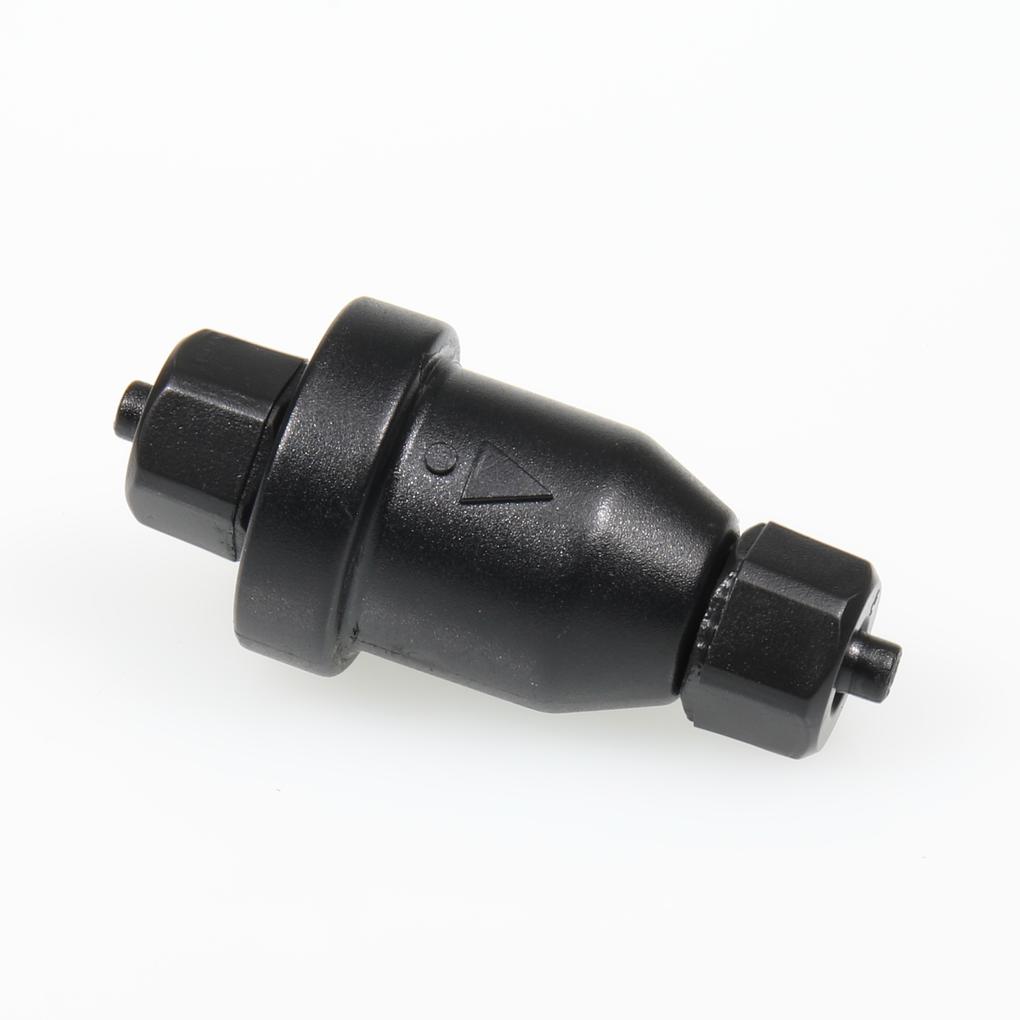
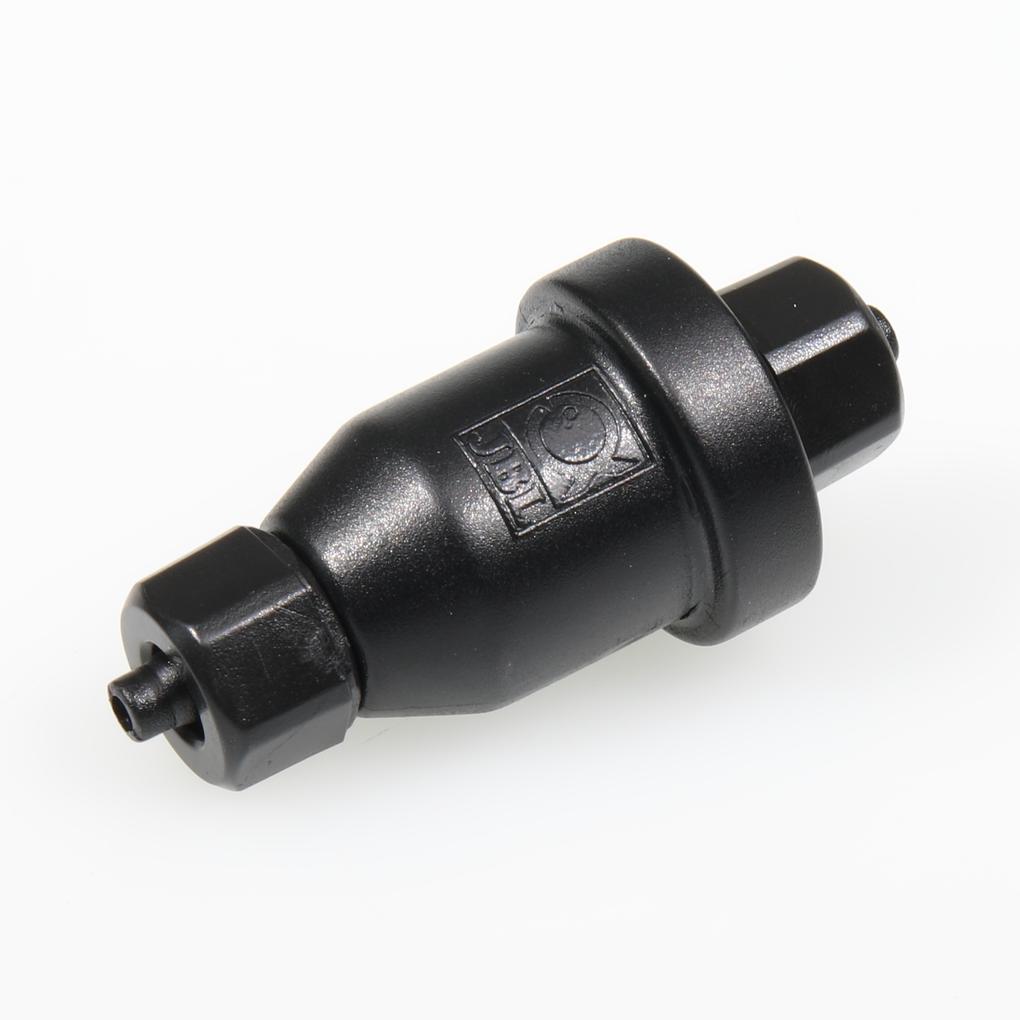
Prevents water from flowing back from the aquarium into the CO2 system (non-return valve)
Item no. 6468100

7.13 EUR

Price incl. 23 VAT plus Delivery
In stock – delivered to you in 1-3 business days
Shop locator

Product features

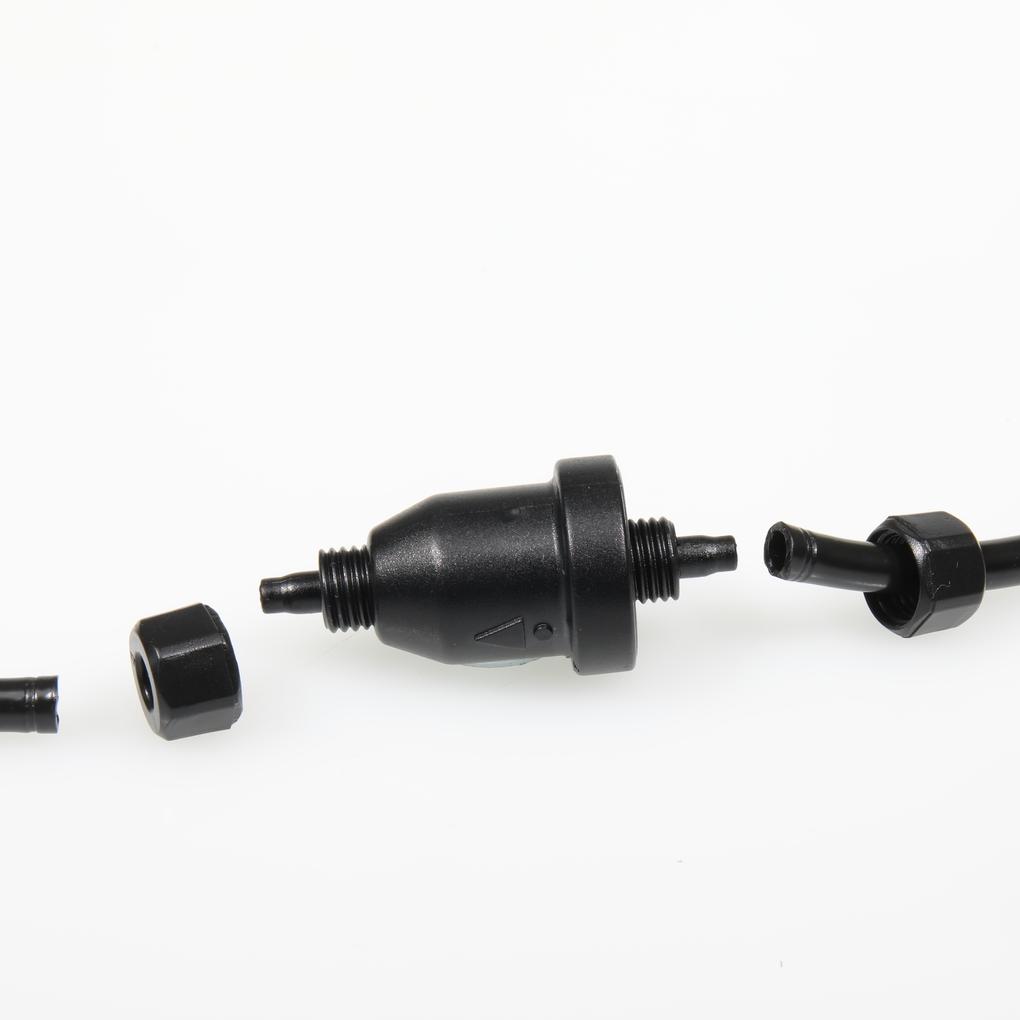
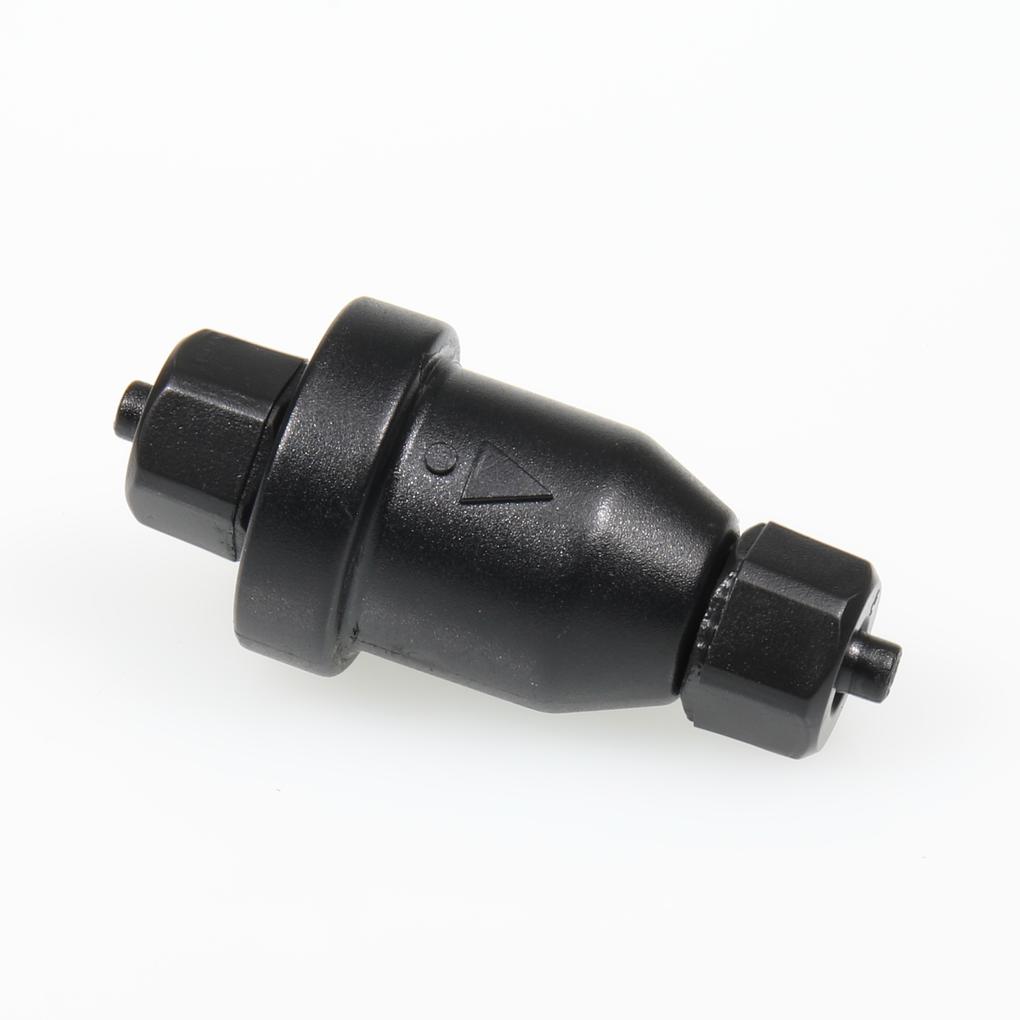
  • Prevents the water from flowing back out of the aquarium into the CO2 technology (check valve)
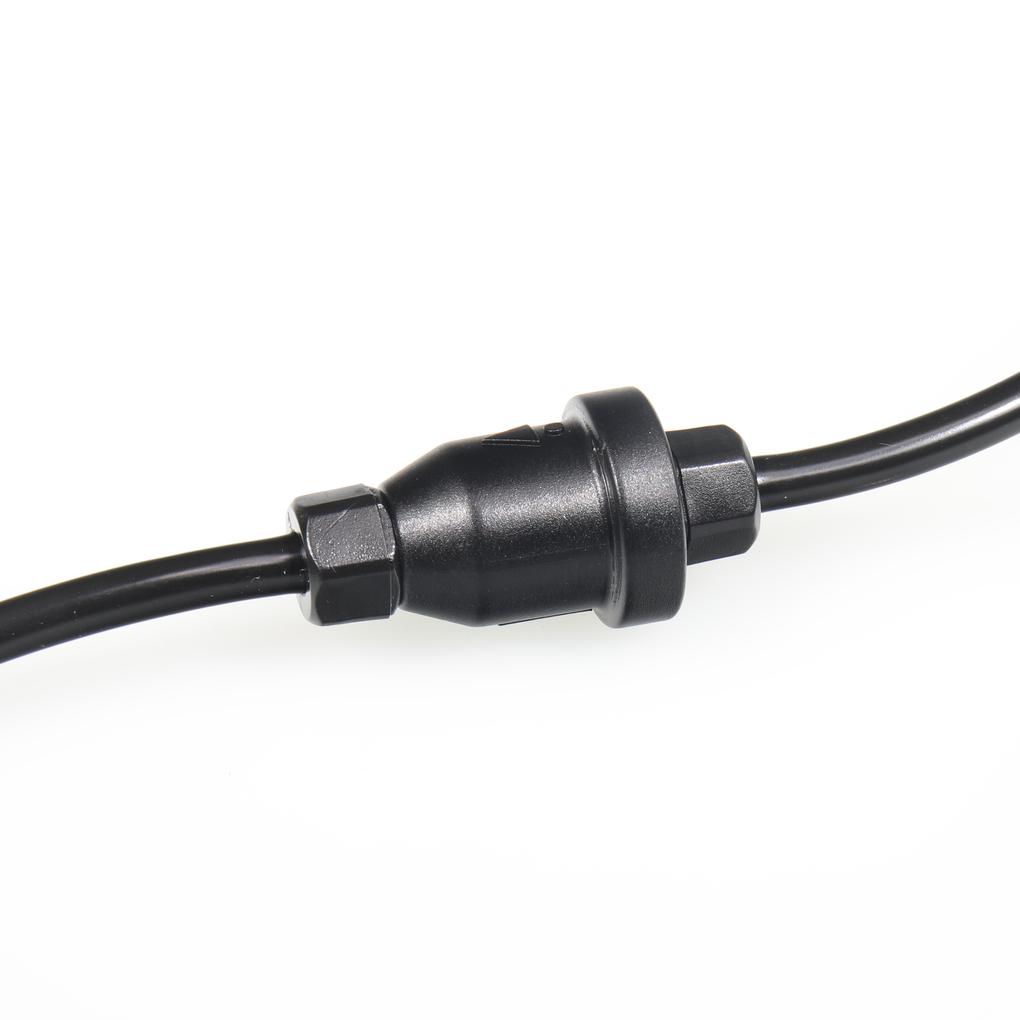
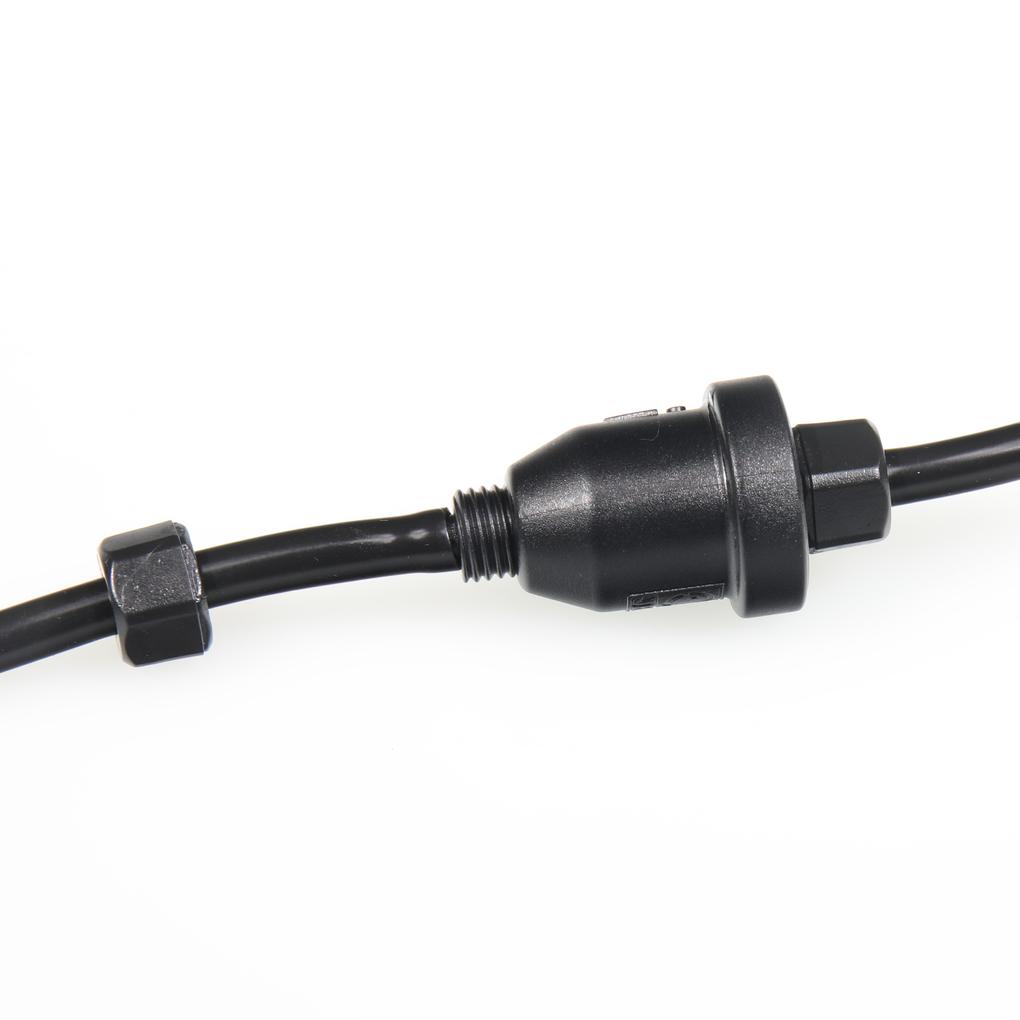
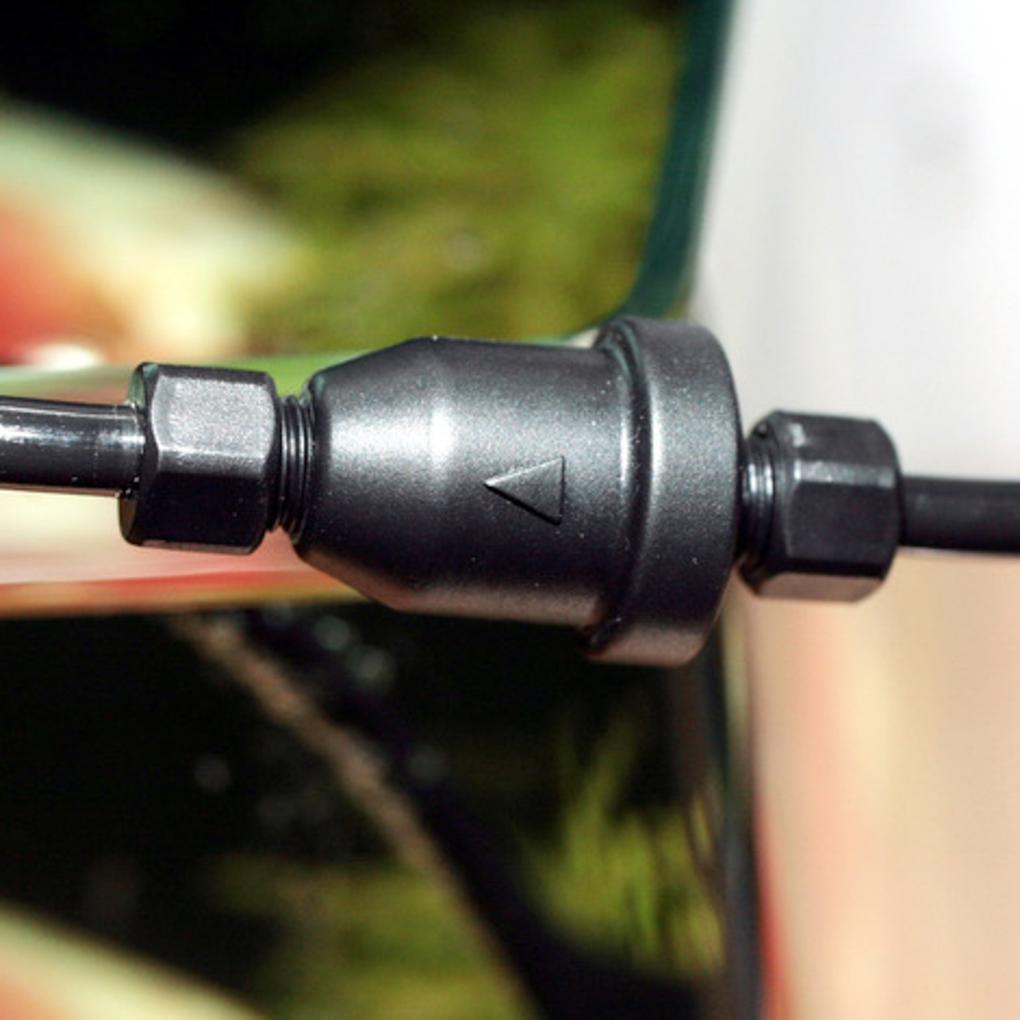
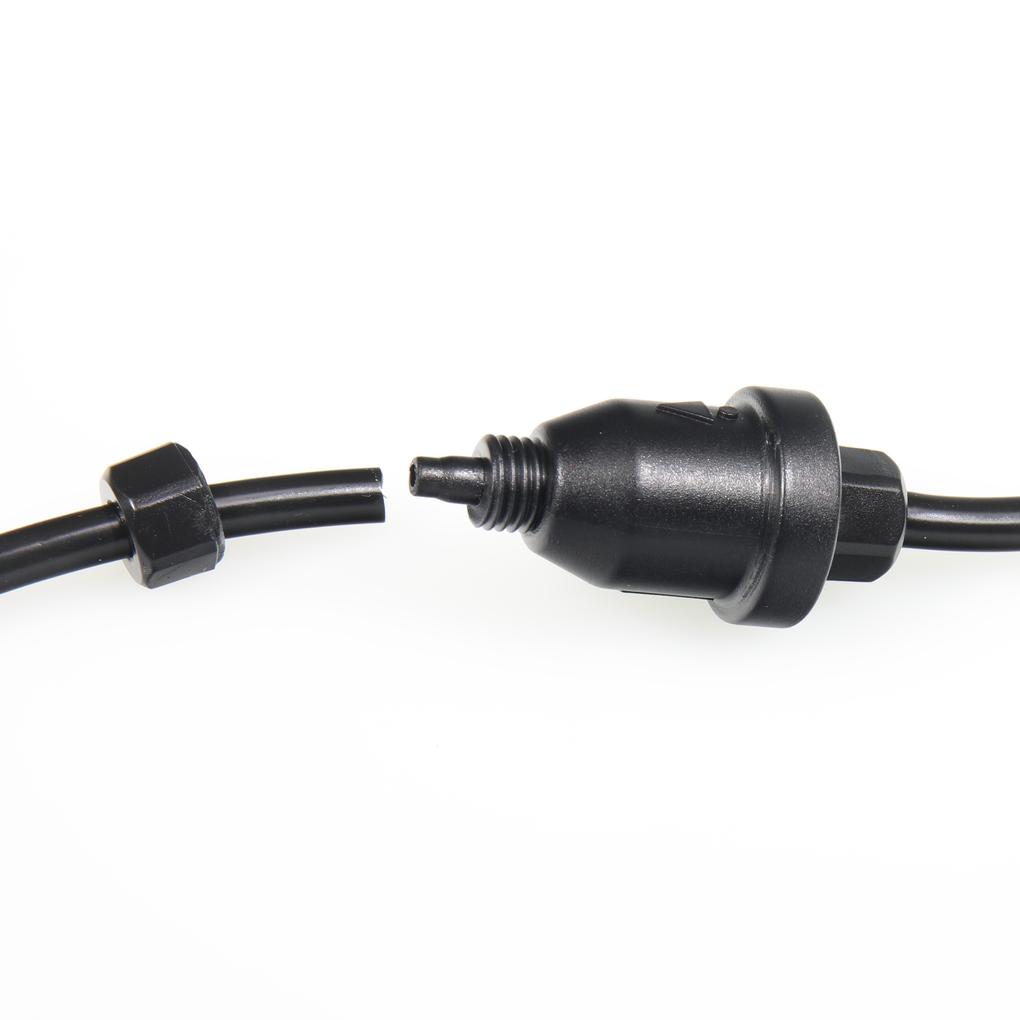
  • Very easy to assemble: cut the CO2 hose and insert the backflow protection in between (arrow points towards the aquarium)
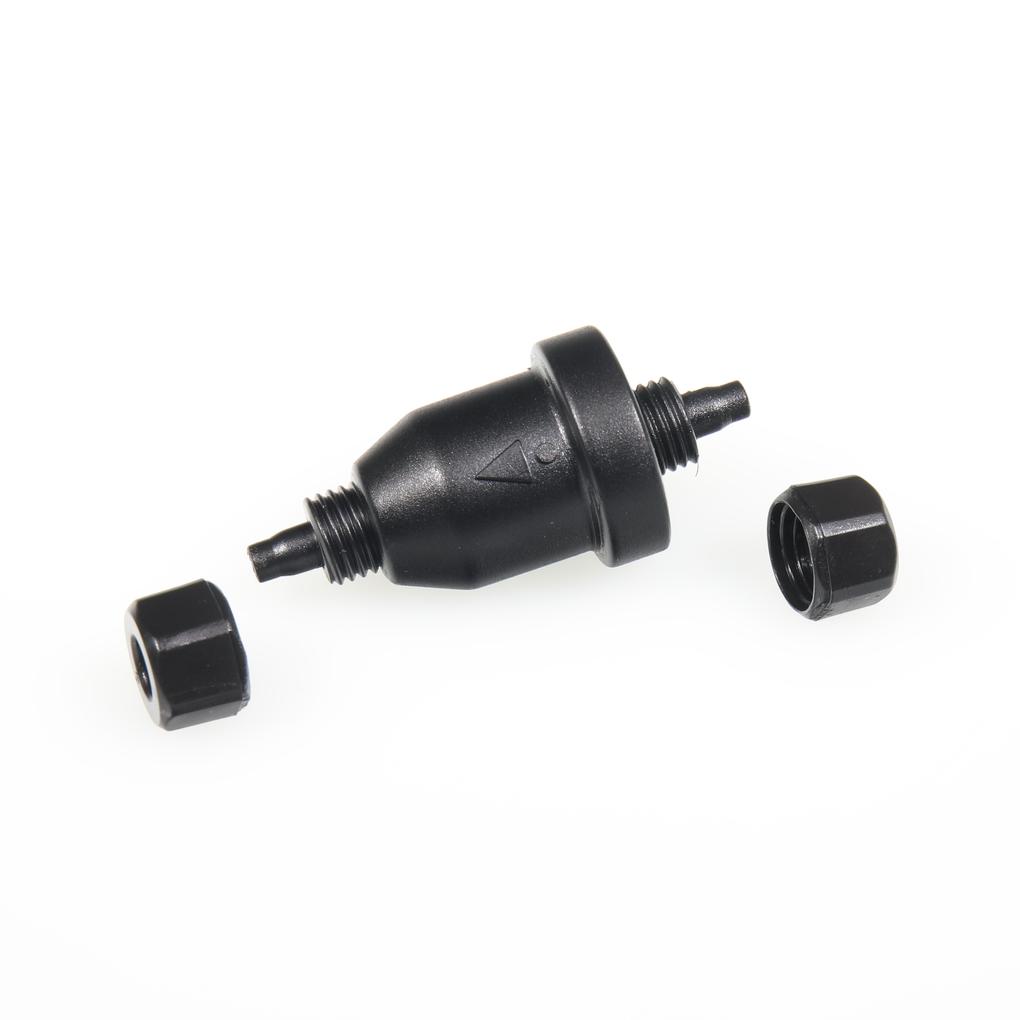
  • Safety: lock nuts prevent the CO2 hose from slipping off
  • For CO2 hoses with Ø 4/6 mm
  • Package contents: 1 check valve for CO2 systems incl. hose securing

Noch offene Fragen?

In unserem FAQ‑Bereich findet ihr Antworten auf die am häufigsten gestellten Fragen. Solltet ihr hier nicht fündig werden, zögert bitte nicht, uns direkt zu kontaktieren – wir helfen euch gerne weiter.

  • Is my check valve defective if I cannot blow through it?

    The safety spring in the non-return valve is very tight and ensures that no water can flow back. Therefore, the air pressure of a diaphragm pump or our breathing air is not sufficient to open the spring. The valve can be opened by the pressure of the ProFlora bioCO2 systems as well as the m and u series. Check valves for installation in conjunction with air have a lower counterpressure and are also available in the JBL range.

    War diese Antwort hilfreich?
  • Should I use multiple check valves on my CO2 system?

    In line with the motto "better safe than sorry," some aquarium owners install several check valves in the same circuit. If you use the JBL PROFLORA direct inline diffuser or the JBL PROFLORA CO2 Count Safe bubble counter, for example, you already have an integrated check valve. If you use a separate check valve (JBL PROFLORA SafeStop) in addition, problems may arise when opening the check valves. This effect can be observed if the addition does not start again automatically after the night shut-off or interruption of the supply with the controller. Please note that, depending on the working pressure and the number of bubbles, it may take a few minutes between the start of the addition and the visible entry of CO2 into the aquarium. Each spring in a check valve requires a certain amount of pressure to open. Multiple springs can therefore interfere with each other and, depending on the distance between the two check valves, reduce the pressure on the spring to such an extent that it remains closed. Therefore, please always use only one check valve for your CO2 installation.

    War diese Antwort hilfreich?
  • What is the minimum working pressure required for using JBL CO2 accessories?

    All check valves and backflow preventers from JBL require a working pressure of at least 0.6 bar for the valve to open. This feature is found in the JBL PROFLORA CO2 TAIFUN SAFESTOP, COUNTSAFE, and INLINE. The JBL PROFLORA TAIFUN diffusers also all work with this pressure. A higher working pressure is not necessary, which is why all accessories also work with the JBL PROFLORA BIO SETs (except JBL PROFLORA CO2 STARTER BIO SET). Depending on the installation, long hoses and other components may require a slightly higher working pressure than 0.6 bar, which is why the default setting of 1.2 bar is sufficient in all cases.

    War diese Antwort hilfreich?
  • Can JBL PROFLORA CO2 products only be used for aquariums?

    Yes, JBL PROFLORA CO2 products are designed exclusively for use in aquariums. The gas supplied promotes plant growth and can be adjusted with fine precision so that even the smallest quantities can be added to the aquarium. This ensures constant operation and the safety of the fish.

    War diese Antwort hilfreich?

Antwort nicht gefunden?

Stelle deine Frage an das JBL Service Team.

Information and consent to cookies & third-party content

We use technically necessary cookies/tools to offer, operate and secure this service. Furthermore ,with your express consent , we use cookies/tools for marketing, tracking, creating personalised content on third-party sites and for displaying third-party content on our website. You can revoke your consent at any time with effect for the future via the menu item ‘Cookie settings’.
By clicking on ‘Allow all’, you give us your express consent to the use of cookies/tools to improve the quality and performance of our service, for functional and personalised performance optimisation, to measure the effectiveness of our ads or campaigns, for personalised content for marketing purposes, including outside our website. This enables us to provide personalised online ads and extended analysis options about your user behaviour. This also includes accessing and storing data on your device. You can revoke your consent at any time with effect for the future via the menu item ‘Cookie settings’.
You can use the ‘Change settings’ button to grant and revoke individual consent to the cookies/tools and receive further information on the cookies/tools we use, their purposes and duration.
By clicking on ‘Only absolutely necessary’, only technically necessary cookies/tools are used.

Our data protection declaration tells you how we process personal data and what purposes we use the data processing for.
PUSH messages from JBL

What are PUSH messages? As part of the W3C standard, web notifications define an API for end-user notifications that are sent to the user's desktop and/or mobile devices via the browser. Notifications appear on the end devices as they are familiar to the end user from apps installed on the device (e.g. emails). Notifications appear on the end user’s device, just like an app (e.g. for emails) installed on the device.

A notification makes it possible to inform the user about an event outside the context of a website, such as a new blog post, a competition or a voucher.

These notifications enable a website operator to contact its users whenever they have a browser open - it doesn’t matter whether the user is currently visiting the website or not.

To be able to send web push notifications, all you need is a website with a web push code installed. This allows brands without apps to take advantage of many of the benefits of push notifications (personalised real-time communications at just the right moment).

Web notifications are part of the W3C standard and define an API for end user notifications. A notification makes it possible to inform the user about an event, such as a new blog post, outside the context of a website.

JBL GmbH & Co. KG provides this service free of charge, and it is easy to activate or deactivate.