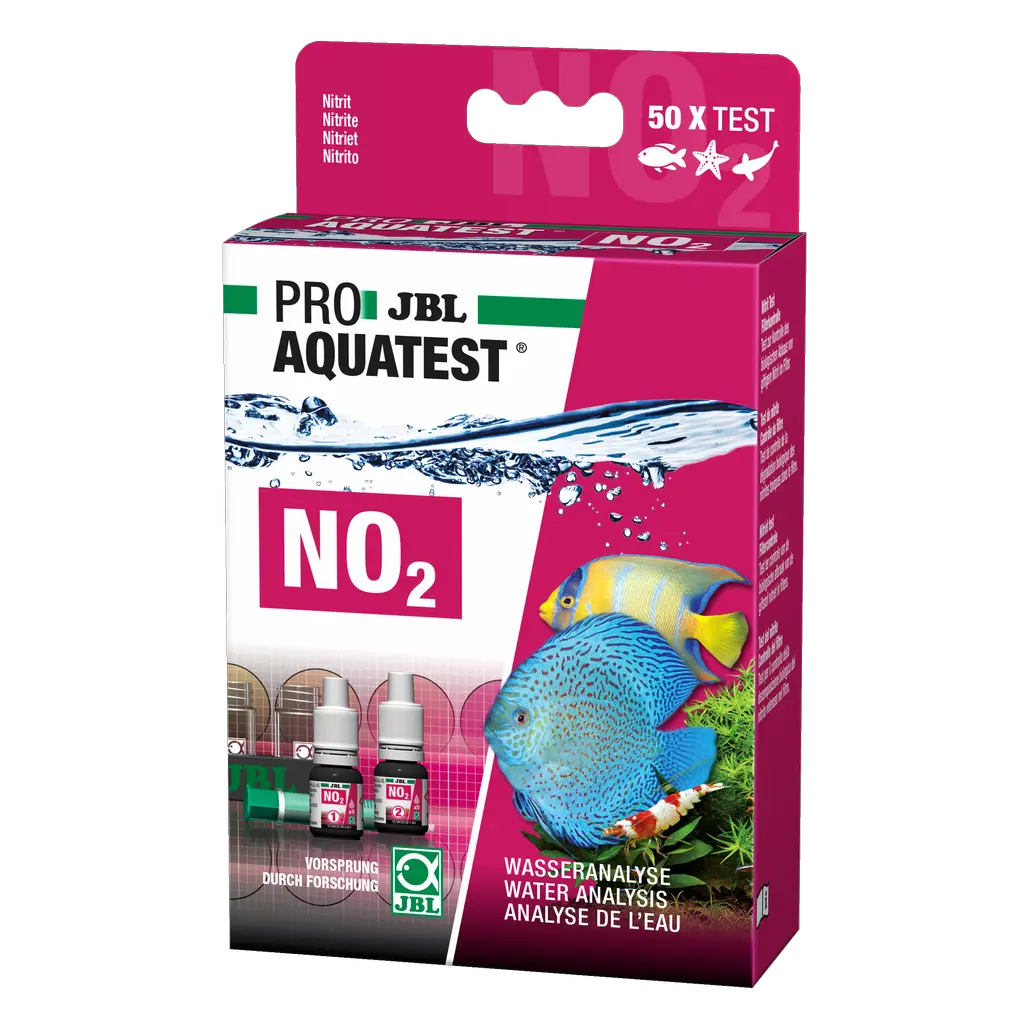
JBL PROAQUATEST NO2 Nitriet

Nitriet is een giftige stikstofverbinding die ontstaat bij een verstoorde bacteriële balans of bij een nieuwe inrichting. De test geeft het nitrietgehalte van het water nauwkeurig weer.

18.3 EUR

Preis inkl. 21 MwSt zzgl. Versand
Uitverkocht - Binnenkort weer beschikbaar
Händlersuche Gefahrenhinweise

Produktmerkmale

  • Nitriet is een giftige stikstofverbinding die bij een verstoord bacterieel evenwicht of bij een nieuwe inrichting kan ontstaan. De test toont nauwkeurig het nitrietgehalte van het water aan
  • Laboratorium comparatorsysteem ter compensatie van de water-eigen verkleuring: Glazen cuvet met testwater vullen. Reagentia in een cuvet druppelen. Cuvetten in de houder plaatsen. Waarde op de kleurenkaart aflezen
  • Gebruik: Bij nieuwe inrichting zoetwater 3 weken lang dagelijks. Bij nieuwe inrichting zeewater 1x per week. Ook bij visziekte of -sterfte
  • op de JBL homepage onder de thema's Aquarium en Vijver vindt u uitgebreide informatie met betrekking tot wateranalyses en probleemoplossingen
  • Inhoud: 1 Nitriettest voor ca. 50 metingen incl. 2 reagentia, 2 glazen cuvetten met schroefdop, spuit, comparatorblok en kleurenscala. Navullende reagens afzonderlijk verkrijgbaar

Gefahrenhinweise

JBL NO2 2 - Sicherheitsinformationen gemäß GHS

Signalwort: Opgelet

Gefahrensymbol

flammable irritant

Gefahrenhinweis

  • H319: Veroorzaakt ernstige oogirritatie.
  • H226: Ontvlambare vloeistof en damp.

Sicherheitshinweise

  • P101: Bij het inwinnen van medisch advies, de verpakking of het etiket ter beschikking houden.
  • P102: Buiten het bereik van kinderen houden.

JBL NO2 1 - Sicherheitsinformationen gemäß GHS

Signalwort: Gevaar

Gefahrensymbol

corrosive

Gefahrenhinweis

  • H318: Veroorzaakt ernstig oogletsel.
  • H314: Veroorzaakt ernstige brandwonden en oogletsel.

Sicherheitshinweise

  • P101: Bij het inwinnen van medisch advies, de verpakking of het etiket ter beschikking houden.
  • P102: Buiten het bereik van kinderen houden.

Gefahrbestimmende Komponente

  • 64-19-7: azijnzuur

Information and consent to cookies & third-party content

We use technically necessary cookies/tools to offer, operate and secure this service. Furthermore ,with your express consent , we use cookies/tools for marketing, tracking, creating personalised content on third-party sites and for displaying third-party content on our website. You can revoke your consent at any time with effect for the future via the menu item ‘Cookie settings’.
By clicking on ‘Allow all’, you give us your express consent to the use of cookies/tools to improve the quality and performance of our service, for functional and personalised performance optimisation, to measure the effectiveness of our ads or campaigns, for personalised content for marketing purposes, including outside our website. This enables us to provide personalised online ads and extended analysis options about your user behaviour. This also includes accessing and storing data on your device. You can revoke your consent at any time with effect for the future via the menu item ‘Cookie settings’.
You can use the ‘Change settings’ button to grant and revoke individual consent to the cookies/tools and receive further information on the cookies/tools we use, their purposes and duration.
By clicking on ‘Only absolutely necessary’, only technically necessary cookies/tools are used.

Na nossa declaração de proteção de dados explicamos-lhe como processamos os seus dados pessoais e para que finalidades usamos o processamento de dados.

Selecione as suas configurações de cookies

Notificações PUSH da JBL

O que são realmente notificações push? Como parte do padrão W3C, as notificações Web definem uma API para notificações de utilizador final que são enviadas através das notificações do navegador para os seus dispositivos fixos e/ou móveis. Nos dispositivos finais, surgem notificações tal como o utilizador final as conhece das apps instaladas no dispositivo (por exemplo, e-mails). Nos dispositivos finais, surgem notificações tal como o utilizador final as conhece das apps instaladas no dispositivo (por exemplo, e-mails).

Uma notificação permite informar o utilizador sobre um acontecimento, por exemplo, um novo artigo no blogue, um concurso, ou um vale, independentemente do contexto de um website.

Estas notificações permitem que um operador de um website possa contactar os seus utilizadores enquanto estes tiverem o navegador aberto - independentemente de estarem a visitar o website no momento ou não.

Para poder enviar notificações Web Push, só é necessário um website com código de Web Push instalado. Assim, as marcas também podem utilizar várias vantagens das notificações push sem apps (comunicações em tempo real personalizadas no momento exato.)

As notificações Web fazem parte do padrão W3C e definem uma API para notificações de utilizador final. Uma notificação permite informar o utilizador sobre um acontecimento, por exemplo, um novo artigo no blogue, independentemente do contexto de um website.

Este serviço é disponibilizado gratuitamente pela JBL GmbH & Co. KG e pode ser ativado ou desativado de forma igualmente simples.